Cycling up Mount Fuji

•October 4, 2014 • 3 Comments

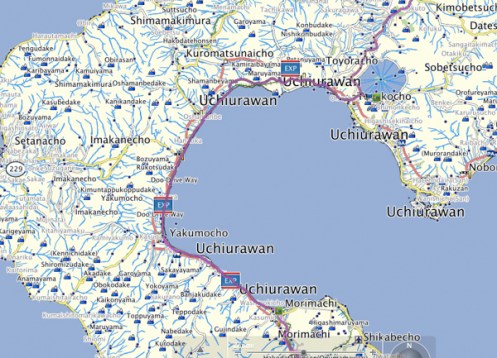
I’ve done some great climbs over the years: Alp d’Huez, Tourmalet, Stelvio, incredible passes on the Tibetan Plateau… and Fuji competes with the best of them. A 22 mile climb, 7220 feet of gain, an unrelenting 8 to 10% grade the entire way, with a few 12% spots just to make sure I didn’t get lazy.  I swear to God, went it did occasionally hit 5% for short while, it felt like a relief.  3.5 hrs up, and 50 minutes down. 

This was my first sighting of Fuji-san when cycling to Fujinomiya the day before. 

And this is what I saw for the first two hours riding up the mountain. Fortunately I have two very bright blinking rear lights so I wasn’t worried about people not seeing me. 

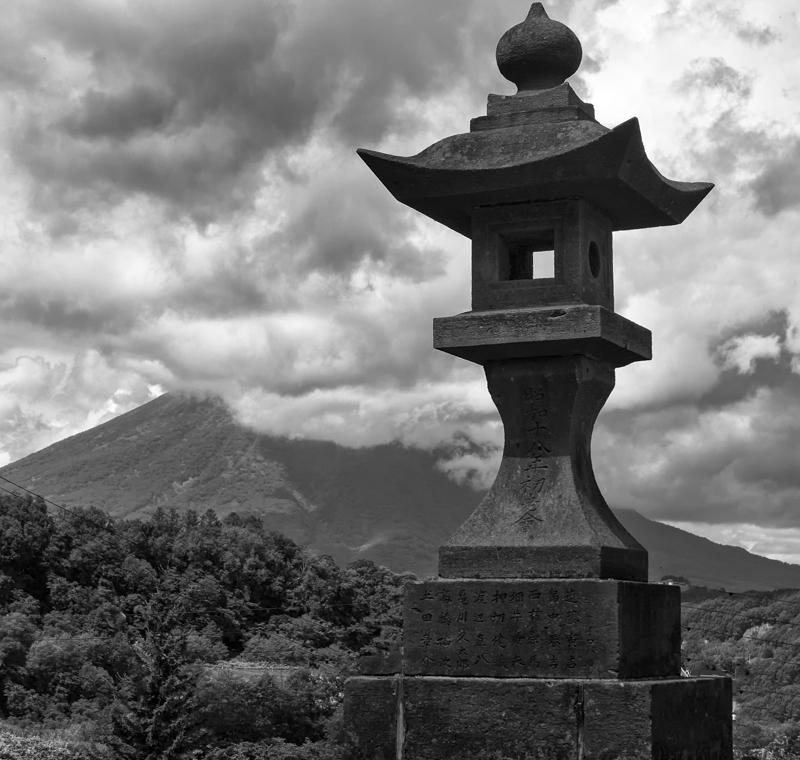
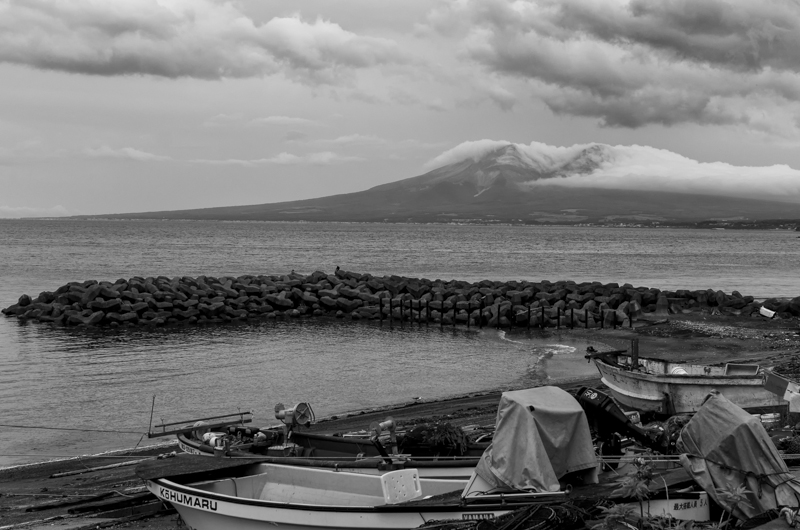
 Then the mountain came into sight. 


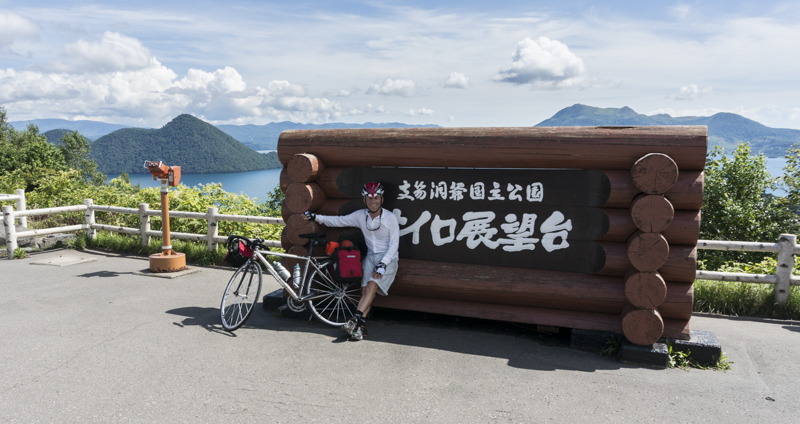
But, when I got to the top, the mountain kept ducking behind the fog once again. It was difficult to coordinate the timing when Fuji-san was visible, I was near the sign, my bike was near the sign, and I was able to find somebody to take a picture. This will have to do. 

Technology Zen

•October 3, 2014 • 2 Comments

Oh Zen master I’ve come to you for help with the most grievous of problems. 
(he looks at me and just gives me a thin smile)

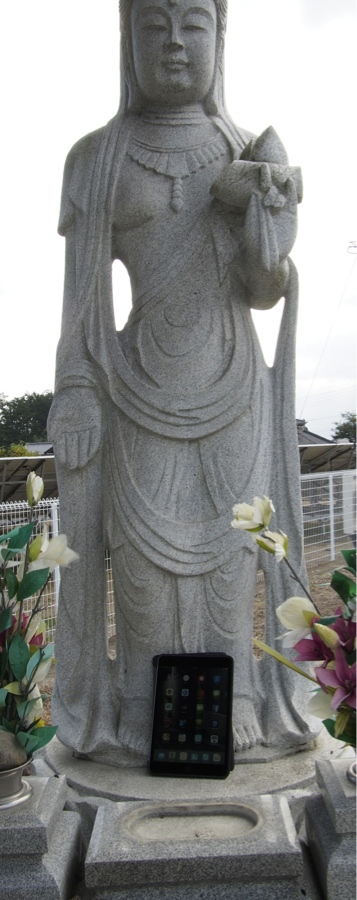
I’ve tried… I’ve tried to get close… I’ve tried to become one with the iPad, but… I cannot make it happen.

(after a long pause) “Yes, my fledgling iOS follower, The way of the iOS is there for you to reach. But you must have confidence and you must follow the path.” 

Great teacher, I’m lost. I miss my real computer. This is a mere facsimile! How do I make the connection?
“You must open the door and follow the iOS. Yes, It will tease you with great promise and then if you lose your way It will disappoint. Stay focused, stay determined. Stay on the path.”

But supreme spiritual IT leader, it’s not real…it’s only an illusion!
“Illusions become real if you believe. Follow the iOS and have faith.”

Oh seer of all things Digital, it almost seems like more trouble than it’s worth. 

“Some things pretend to be something they are not. You must look through the pretense and see what’s real. And, It might be a good idea if you lower your expectations a bit. Remember it’s just a big phone.” 

(he holds his hands up, indicating it’s time for me to leave)

I walk down the rocky path with visions of my MacBook air floating in my head.  

GPS don’t fail me now!

•October 2, 2014 • 1 Comment

I said that more than once to myself in the last two days.  Sure I could’ve plotted a route that stayed in the river valleys or even along the coast, but that would’ve been boring. Each day I go up into the mountains and back down again to spend the night, then up in the mountains again.

But there were times- like when my route took me on this teeny little connector road that was actually longer than I thought and really steep and very remote – that I wondered if something with my navigation had gone wrong. But no, it got me to where I want to go!

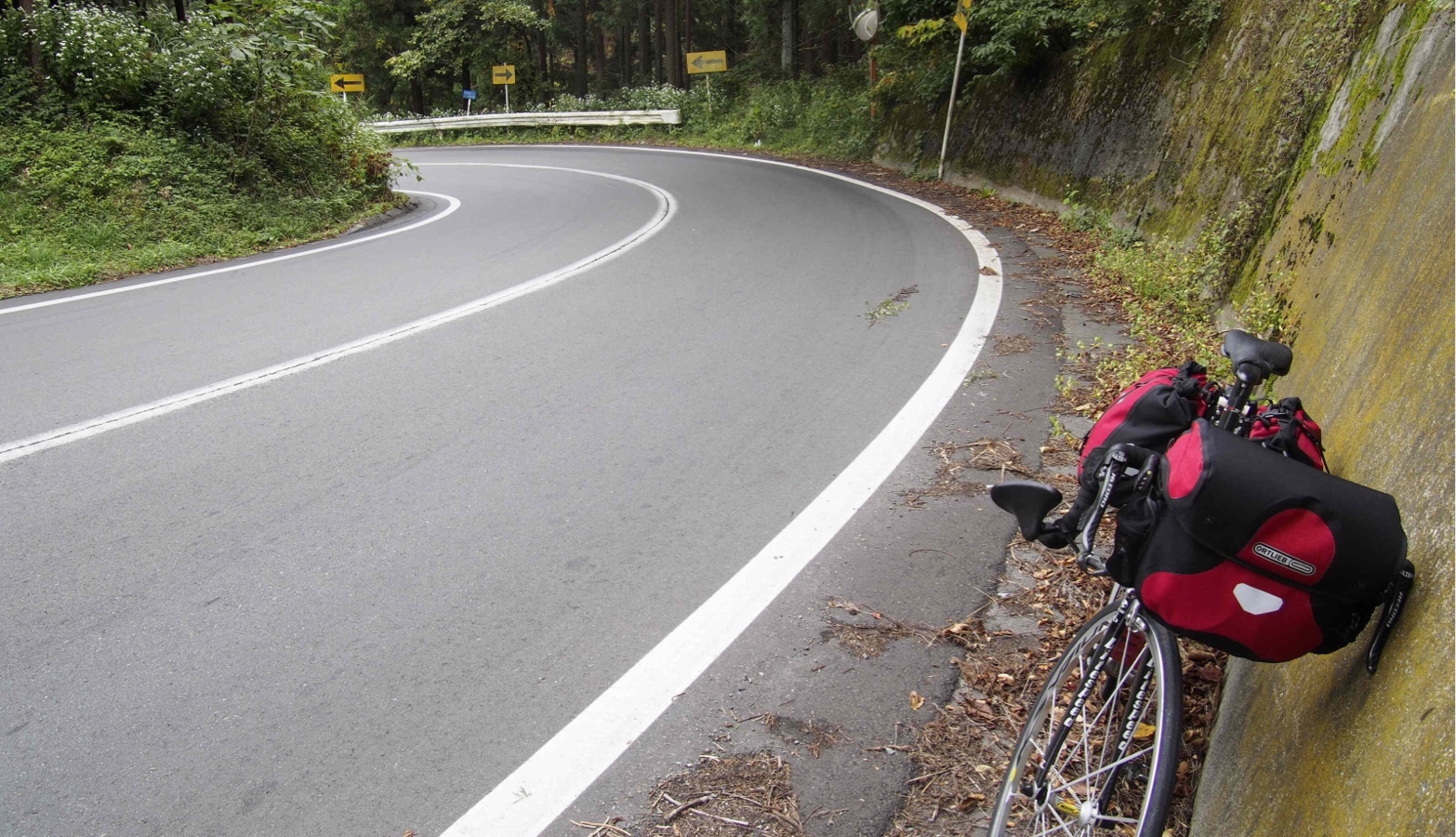
I stopped to take a picture of the 10% grade sign, and then these guys came along. The road stayed at 8 to 10% grade for just over 10 miles. It was a beautiful smooth wonderful road the whole climb.


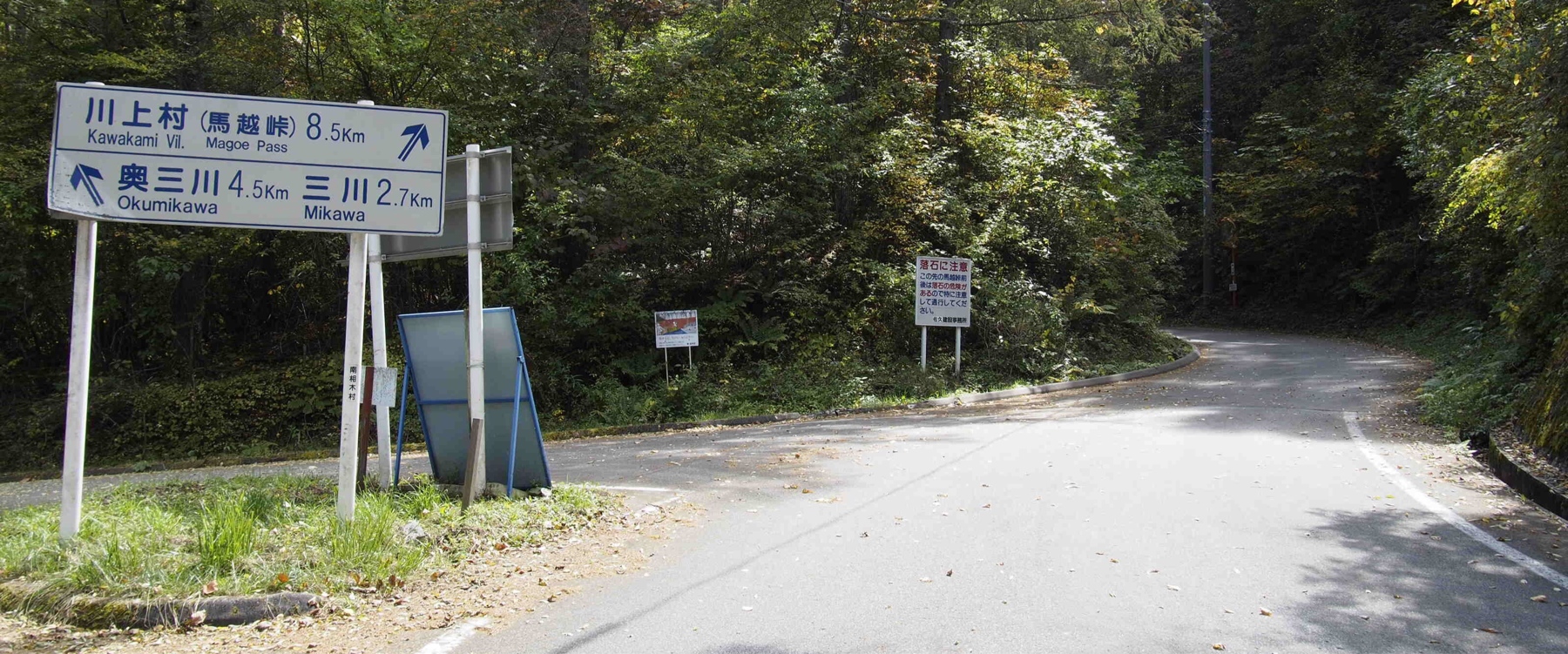
And then the next day I came to this intersection. I had been climbing for about 10 miles and now I had another 8k to go to the summit!  The road looked like it was basically wide enough for one car, which it was, but there weren’t any. 


There are ricefields everywhere

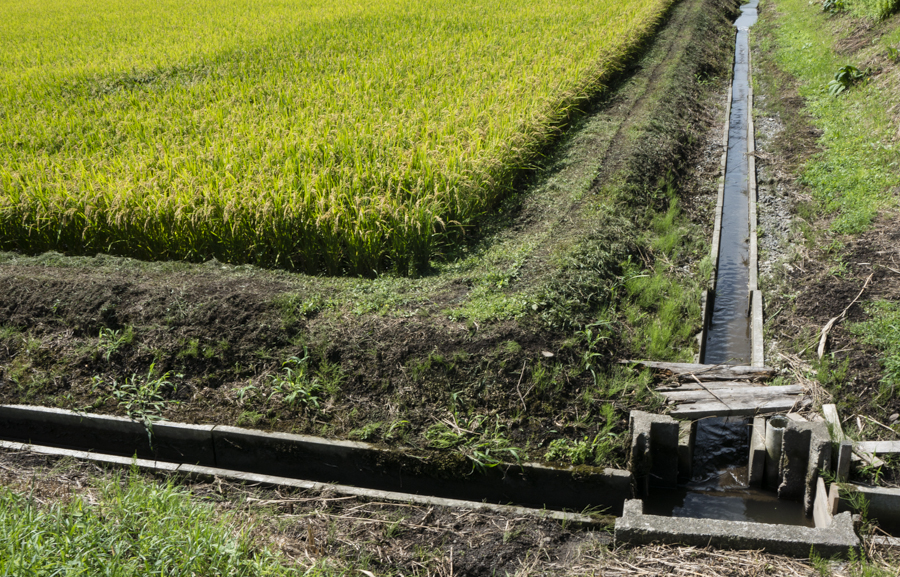
 All of the people working the fields are old, I’ve never seen one young person. It appears that they harvest the rice and then burn the remains.


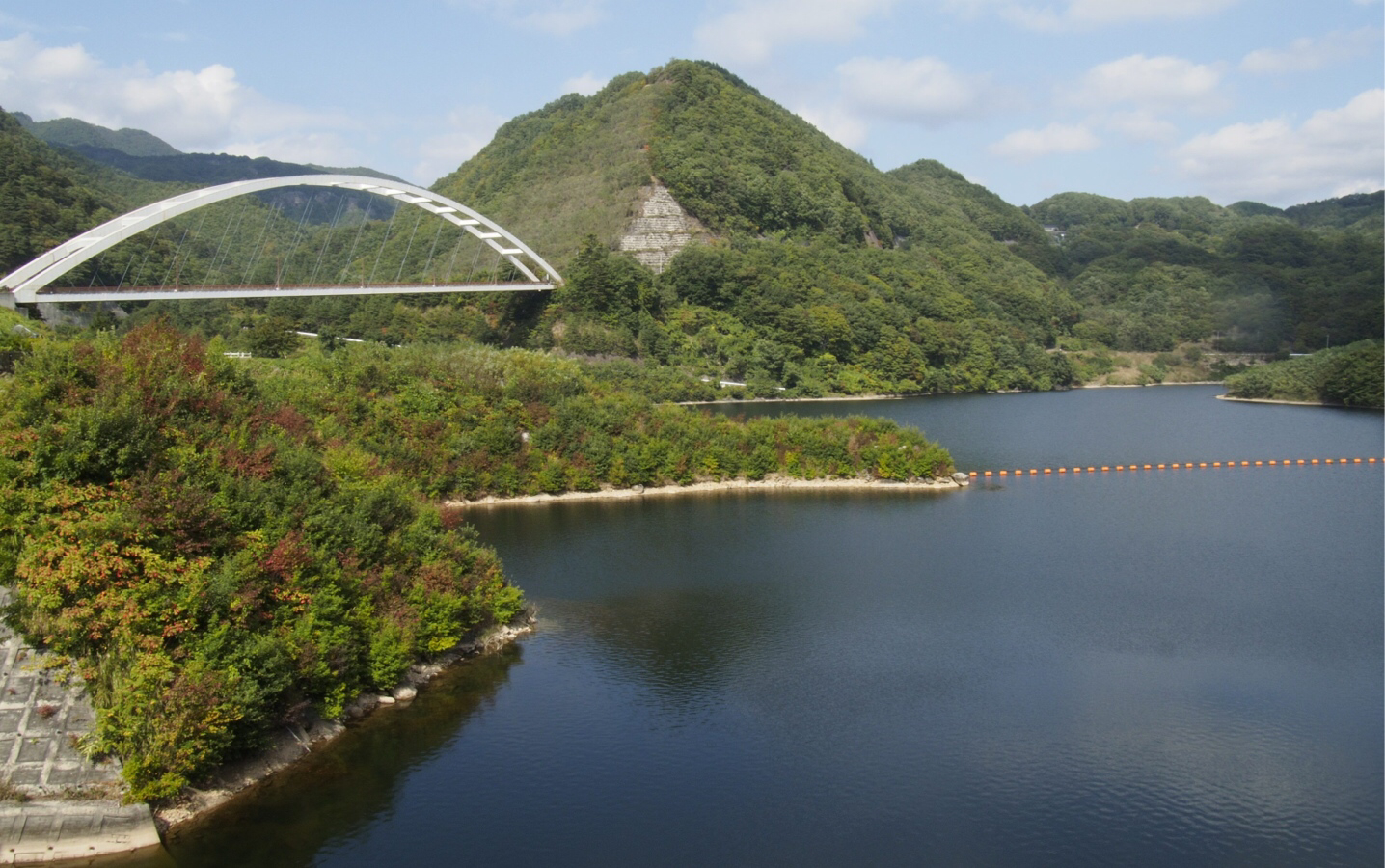
One advantage of taking the quieter roads, besides the climbs is that you get to see beautiful spots like this. 

The train to Nagano

•September 30, 2014 • 6 Comments

Today was a day off cycling. I took the train to avoid about 200 miles of riding along a flat, mostly crowded river valley to Nagano. 

I have a home-made bike cover for the trains (it’s required). It’s made from the lightest, though strongest material I could find. Cuben Fiber. It’s what America’s Cup sails use, only mine is an extremely lightweight version. Total bag: 2 oz. 

My connection in Takasaki was SIX MINUTES, and I had to go down into the main station and then go up to another track. Plus, I was in the last train car, so my trek was that much further. This while carrying my bike and bags. Once I stepped into the car bound for Nagano and put down my stuff, the bells rang and the doors quietly closed.

The Shinkansen has a max speed of 200mph, and the route from Niigata to Takasaki was mostly in tunnels. Sometimes for well over 10 minutes at a stretch. Even if they slow down to 100mph in tunnels, that makes for a succession of 15-20 mile long holes below the mountains, one after another.

The trains are always on time. In my 4 visits here, and dozens of train rides, I’ve never seen a late train. And they are spotlessly clean. While waiting for the Narita Express I watched the cleaning crew clean the train. Now this is a train that goes back and forth from the airport and Tokyo every hour. How dirty could it get? Well, not only did they empty the trash, but they mopped – yes wet mopped – the floors and vacuumed the carpet and wiped all the surfaces. It was like riding in a mobile operating room.

All the announcements are in Japanese, then English. The English is always the same British woman no matter which train I’m on, or which region I’m in. So, think about that for a second: hundreds of trains, countless permutations of the required announcement as each train makes its journey. How long did it take her to record all those thousands of announcements? And it’s definitely NOT a synthetic voice. I’d like to ask her how she did that.

Oh yes, the outsides of the trains are spotless, too.

 ——-–—————————-

Has to be the widest crosswalk I’ve ever seen. Must be 150′ wide. 

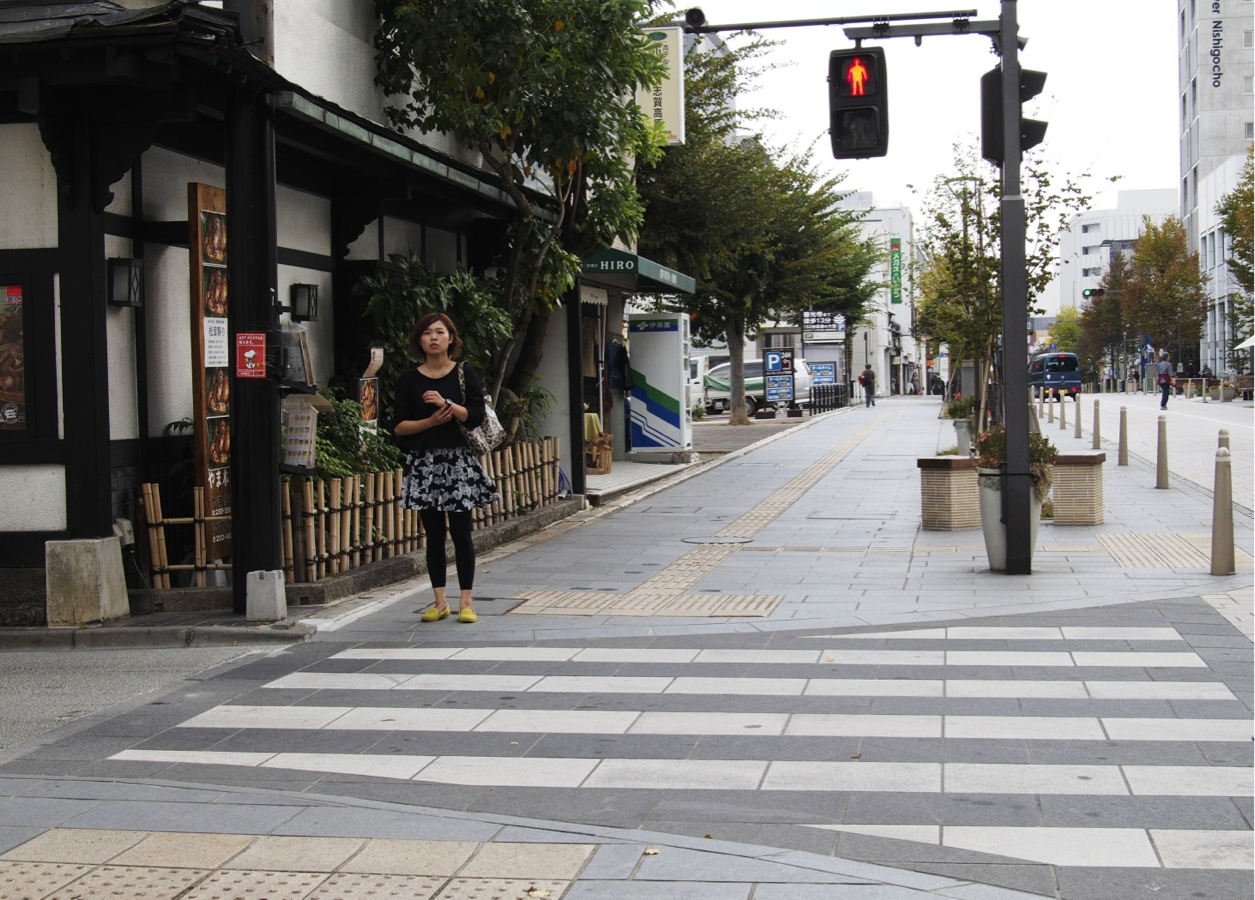
Speaking of crosswalks. Here’s a scene I’ve seen hundreds of times. A very narrow single lane road coming to an intersection, and the little man is red and people wait. And wait. Five or six steps and you would be across the road and there isn’t a car in sight.  You can see several hundred feet down the road and there’s nothing coming.   

Downtown Nagano shop

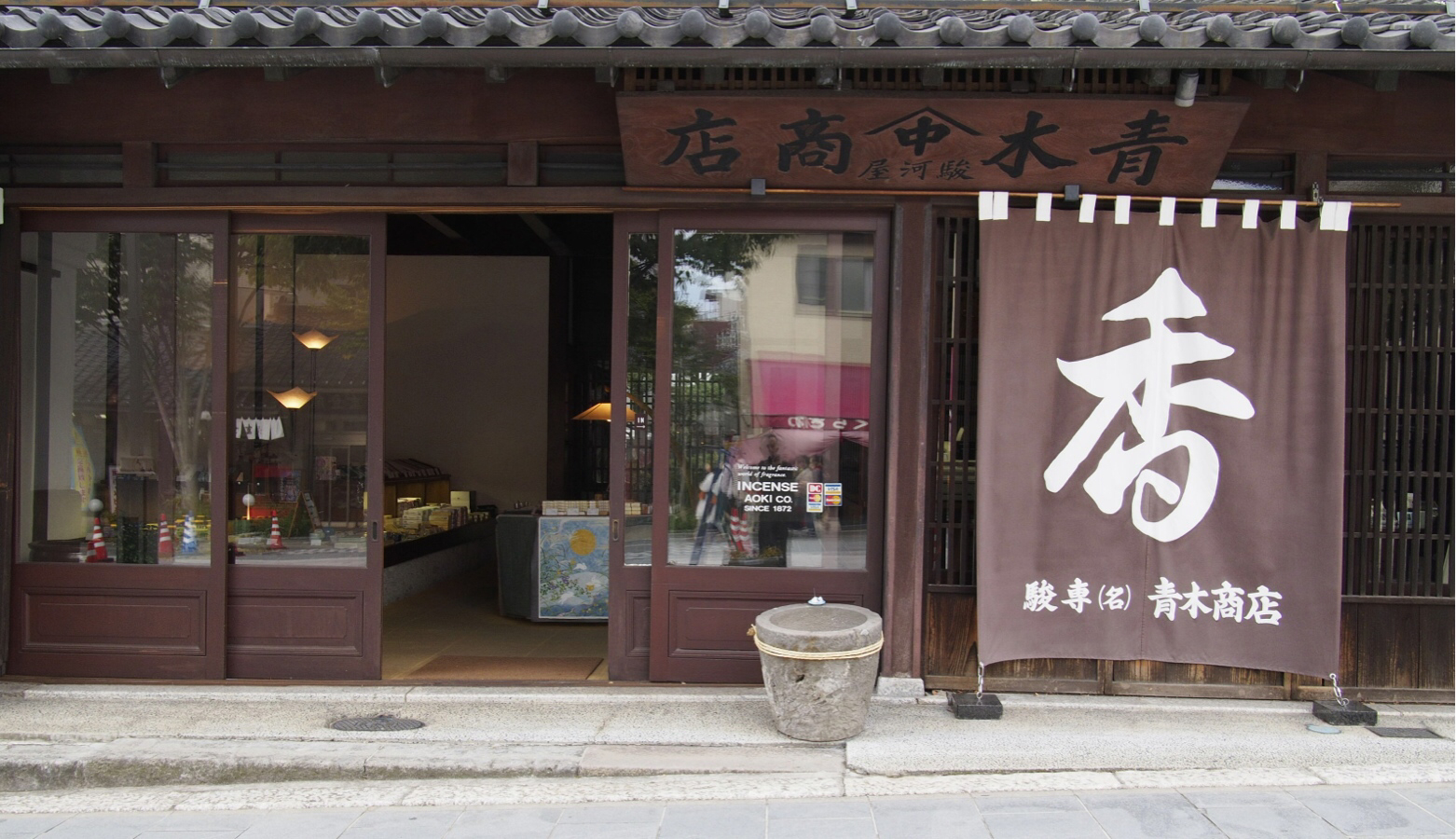
 This is the road leading to a large temple in downtown Nagano. Unlike the Street prior to this with tasteful shops, here you have the pre-temple walk of commerce. Mostly ice cream and candy shops. 

2 days on the coast: Akita to Murakami

•September 29, 2014 • 3 Comments

My ride started in Akita with another amazing Japanese breakfast with every imaginable fish and fish-like thing you can think of. They even had a natto bar- natto is fermented soybeans in a slimy disgusting mucousy substance that makes it the most revolting thing you could possibly eat. The bar allowed people to customize their soybeans so possibly they would be less or more disgusting depending on your preference. It’s the one Japanese food I refuse to eat.

The restaurant at breakfast was filled with all middle-aged Japanese women, well over 100 of them, and me. I haven’t seen a Westerner since I started. 


My hotel in Sakata was on a busy road outside of town so walkable dinner options were limited. This place was across the street so I figured why not. Conveyor belt sushi. The food was very good but the ambience…well that was another matter. If the lights were any brighter they would have had to issue welding masks to protect your retinas from being seared. It was like eating in a Walmart. But damn it was good, and great value. I was so full walking out the door I was hoping for a pair of giant chopsticks to come from the sky and pick me up and set me in my bed.

I’m not a great fan of coastal rides. They are usually flat- and really, how much of the ocean can you look at- it’s the same thing over and over again, it never changes. I much prefer the twisty mountain roads, they are way more interesting plus the climbs are a lot more fun. And Seaside areas tend to be overcrowded and just plain overdeveloped. The first day was a bit Boring, flat, and straight.

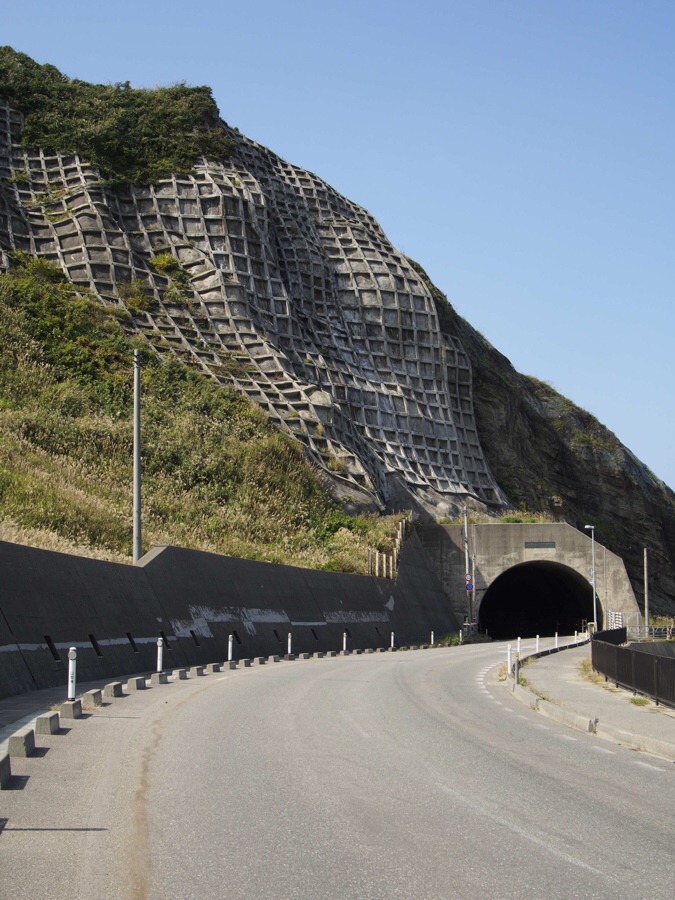
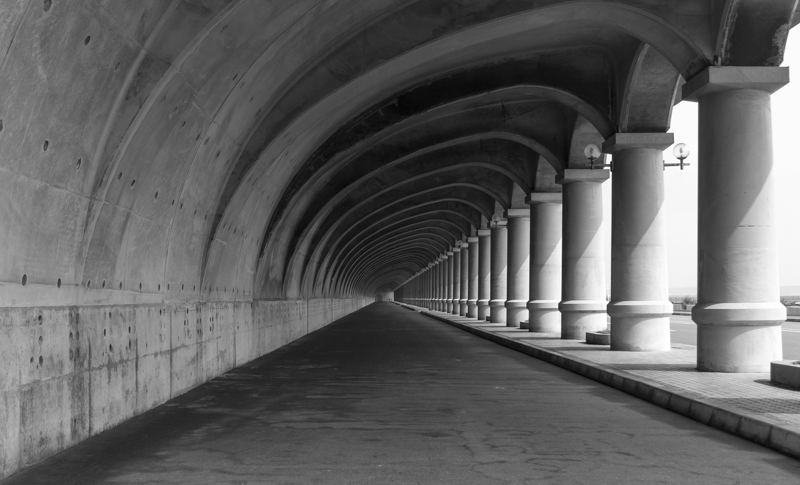
Mountain slopes often had this really bizarre concrete cover over them- they didn’t really modify the shape of the mountain just poured concrete over it.


But the next day was different. It was a nice coastal route with small farms with row on row of greenhouses. There were steep hills that fell right into the sea…which meant lots of tunnels. Most of which had nice separated bike lanes. It was a small road that wound through seaside villages and fishing ports. It was a good day on the bike.


Nice bike lane in tunnel


Huge objects maybe 20 feet tall that will become a breakwall.


It took me quite a while to convince this woman to let me to take a photo as she was laying out her dried beans


There is salmon hanging all over this town


My hotel in Murakami is a small recently remodeled Ryokan. Murakami is a charming little town with quintessentially perfect Japanese specialty shops

I asked the woman who owns the ryokan for a soba place for dinner and she suggested a small restaurant a few hundred yards away. Nothing was an English: they didn’t speak it, the menu had no English and it didn’t even have pictures. I said in my horrible Japanese for them to make a recommendation. The women were very accommodating or trying to be accommodating, but the man behind the bar in the kitchen who was the chef was visibly annoyed because I couldn’t tell him what I wanted. Finally I got across I wanted soba noodles and tempura and that was it for now. I told him in Japanese how good it was: oishee! He started to warm up. Then I saw him with a bag of what looked like very small mussels. I asked him what they were and he told me. I never heard of them before but I had him make me some…oishee! A really great meal with Sakae for about $18. If…if…if you could find a meal like that in the US it would cost four times as much.

Gotta love the food, though fruit does not appear in a traditional Japanese breakfast. In a ryokan, like this morning, you don’t get a selection (no buffet like western hotels) so you eat what’s in front of you.  One item this morning was a bowl with squid, octopus, and fish roe in it… I hate it. And with all the salmon hanging all over town yes there was salmon on my plate, and it was fantastic. 


Why do a cycling tour in Japan?

•September 28, 2014 • 2 Comments

I figure there are 10 reasons why touring Japan by bicycle is a great idea, but the first reason is the roads. I know I can be a bit effusive about Japanese roads but… Just take a look!

 Mountain roads in Northern Honshu. I honestly didn’t know asphalt could be this smooth.  It was truly unbelievable. 


Yea, there’s no bike lane, but there weren’t very many cars either. 

OK, there are bike lanes and then there are blank lanes. Sure, this may be a bit over-the-top, however, city planners in America don’t have a clue. 

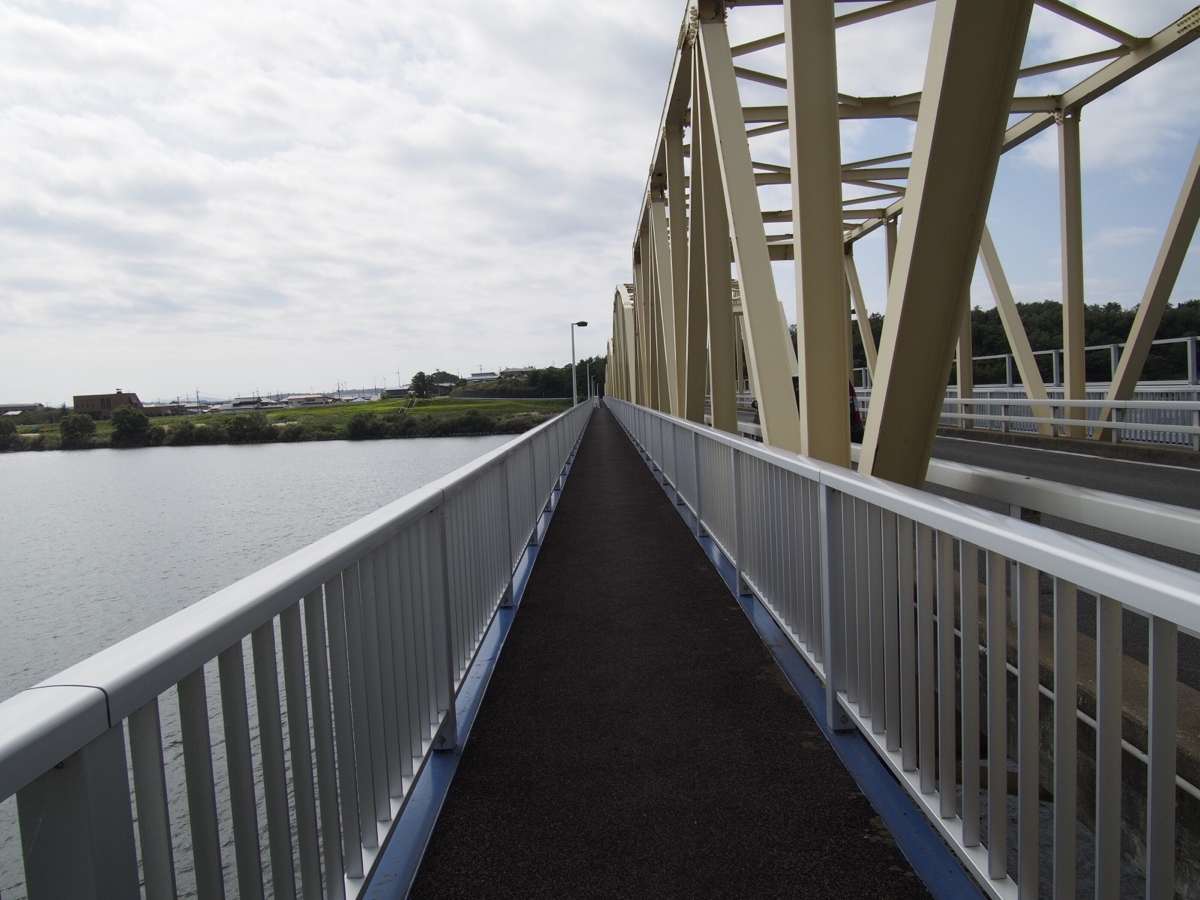
Some bike lane along the bridge, huh?  

Not all of the roads are this amazing, but enough of them are to make cycling here great. 


Getting ready to ride…kinda

•September 24, 2014 • 3 Comments

I arrived in Japan last night but unfortunately my bike did not, it decided to go to San Francisco. Supposedly it will be here this afternoon.  United Airlines cannot send my bike up to me in Aomori in time so I had to spend the night in Tokyo and I’ll get my bike today arriving up north one day later.  With luck I’ll be able to start the journey on time as planned. However that means spending the day here at a hotel near the airport that United paid for but,,,it’s not a terribly charming area. 


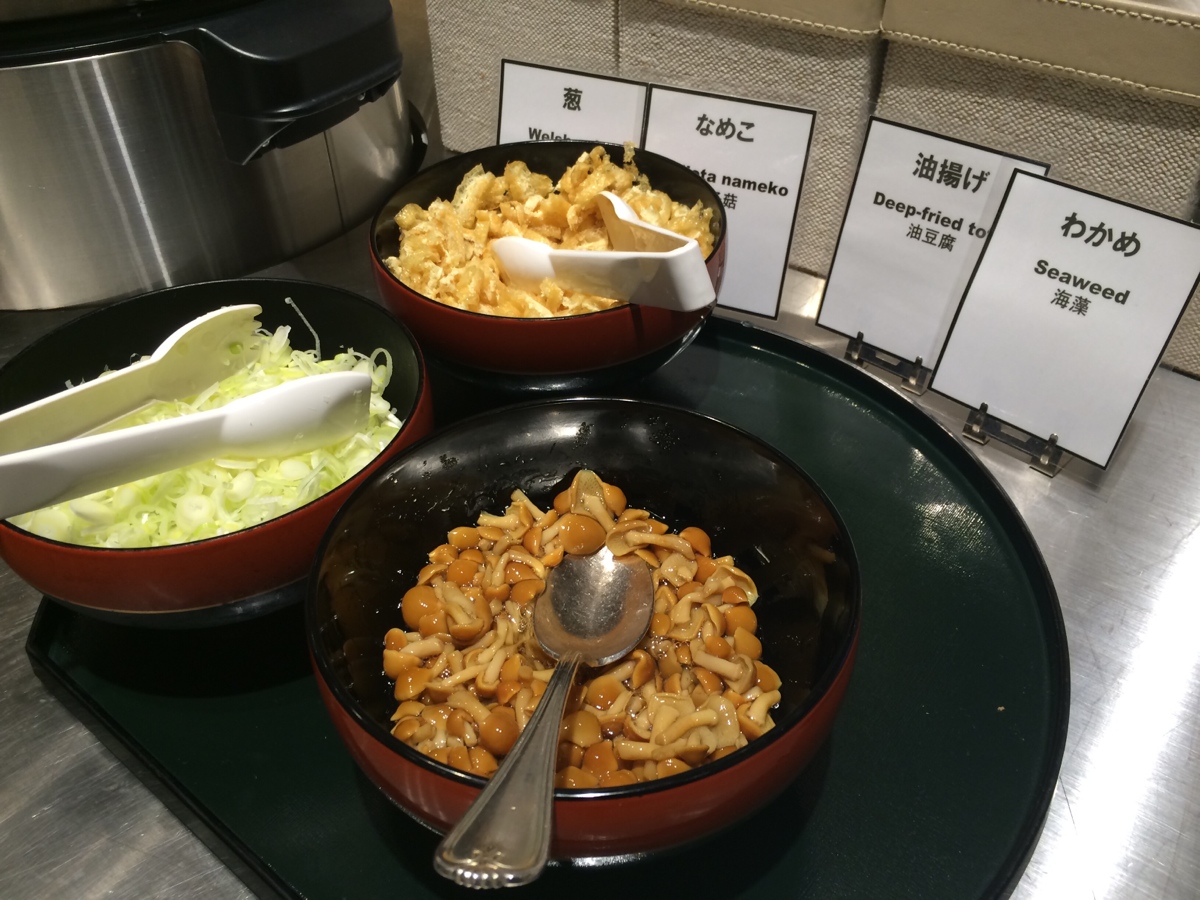
My first breakfast was a very typical Japanese experience. Fish, soy, pickles… feels a lot like lunch. 

The fish was excellent

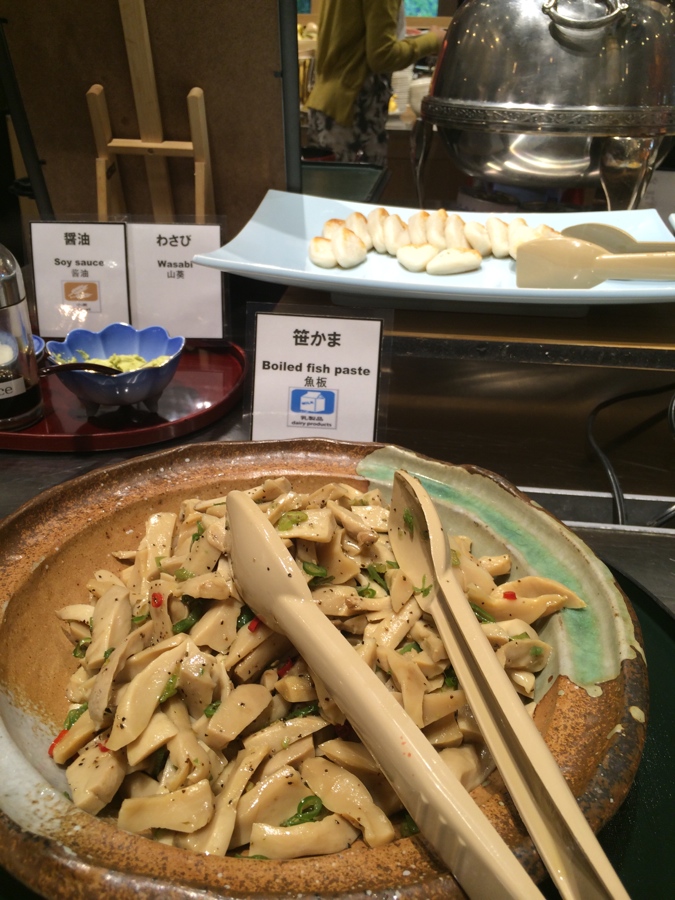
The boiled fish paste was very good too.


 Dioscorea appears to be a mountain yam that’s turned into a soup. 

  Always lots of pickled things for breakfast. 

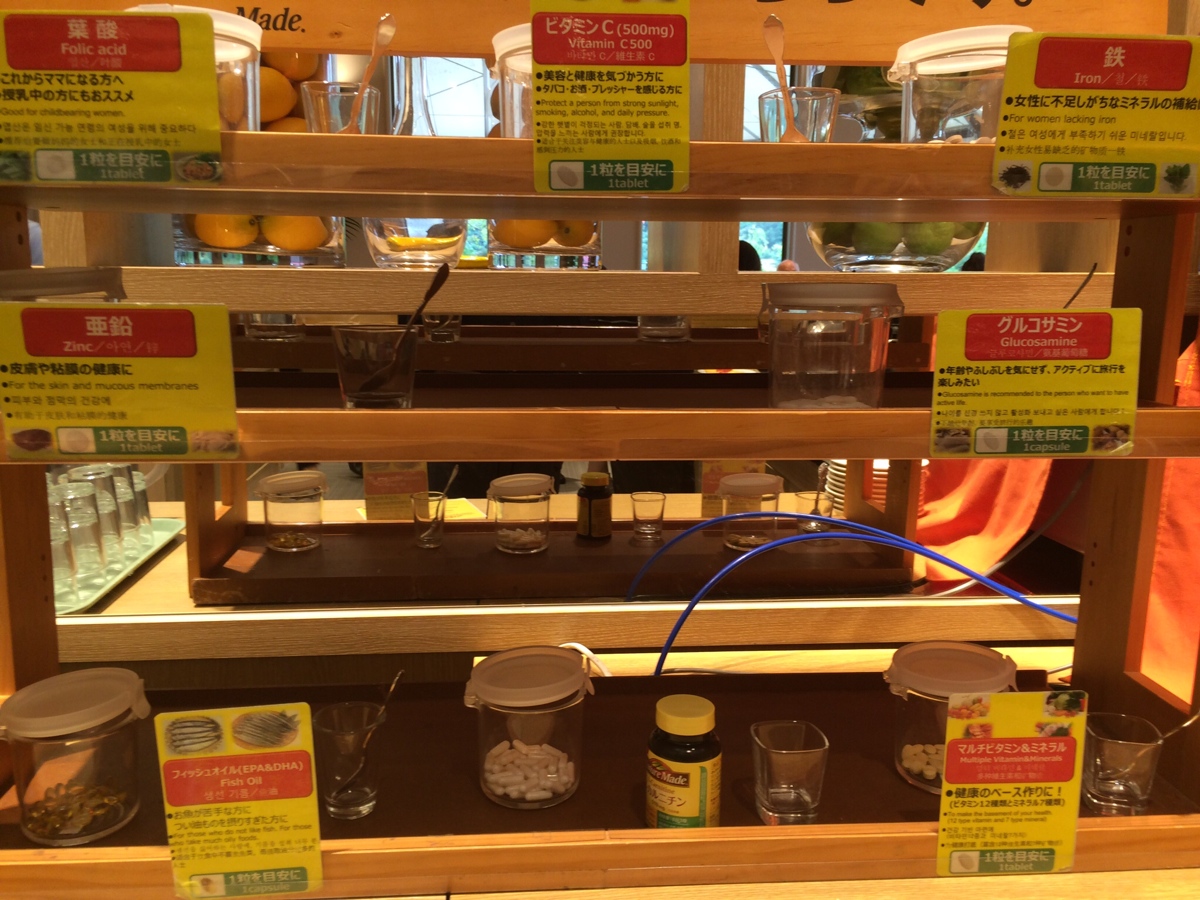
And this is a first: a vitamin bar, and I don’t mean the kind of bar you eat, but an actual vitamin stand to have a selection of vitamins with your breakfast. 

A Solo Journey: Cycling the Length of Japan

•September 21, 2014 • 5 Comments

candy shop

Last year I started my first solo Length of Japan cycle tour, but after 10 days and 540 miles I had to fly home unexpectedly. This year, I’m taking up where I left off.

Once again, I will be posting photos of my trip.  In this “Phase II Tour”, I will ride 21 days, rest a few, and cover about 1200 miles from the very north of the main island of Honshu to the south of Kyushu.

If you want to be notified when I make a post, simply click the button “Sign me up!” under my photo (right panel) and enter your email address (you can set notification parameters, and unsubscribe any time).

Here’s the route…
North Honshu:      Aomori to Murakami, 250 miles, 11,000′, 4 cycling days

Central Honshu:      Nagano to Mt Fuji, 180 miles, 20,000′, 4 cycling days

Kansai:     Toba to Wakayama, 150 miles, 10,300′, 4 cycling days

Shikoku:     Tokushima to Yawatahama, 240 miles, 14,200′, 4 cycling days

Kyushu:    Beppu to Cape Sata and Ibusuki, 325 miles, 27,200′, 5 cycling days

The Paper Village of Echizen, Japan

•October 20, 2013 • 4 Comments

We visited Echizen for a few days, which is a center for Washi, or hand-made Japanese paper, made mostly from Kozo.  Alison took a workshop, and I spent the day riding around.

This slideshow requires JavaScript.

Kyoto, Japan 2013

•October 20, 2013 • Leave a Comment

This slideshow requires JavaScript.

Best Laid Plans…

•September 26, 2013 • 3 Comments

Japan2013_09-26-3

This is not exactly how my cycling journey was intended to end.  About ¼ into the ride, over three weeks ago, I received word of a family medial emergency at home, which required my presence.

So, with no advanced planning, I had to cycle to the next city that had the Shinkansen (high speed train), doing two hilly days of cycling in one day, then I got my bike box shipped up to me, which was waiting for me at my last hotel, and then I booked the first available flight home.

Things at home are fine now, but the cycling trip could not be completed, which is disappointing, but under the circumstances, it was simply not possible.   Whether I finish it at a later date is still a question mark.

Abandoning a goal that I set (especially one with so much planning invested) is not something I do very often, so this has been a particularly poignant experience that I’ve had to accept.   Life is a constant surprise, and making tough adjustments along the way is an important part.

My wife, Alison, had planned on coming to Japan at the end of my trip, and we decided to keep those plans, so we’ve returned for 18 days; though, there won’t be any cycling, unless you count riding upright city bikes with baskets on the front, like the photo of me in Kyoto yesterday.

Cycling Japan: Food and Restaurants

•August 31, 2013 • 2 Comments

This slideshow requires JavaScript.

these 5 photos have absolutely nothing to do with food or restaurants

___

FOOD:  There are plenty of places in the world that can be considered food destinations, Italy and France being two of my favorite.  But the food in Japan is incredible, not just because it’s so good, but it’s so unusual and varied.  Sure, there are a few things that may challenge the Western Palette, but mostly the food is fantastic.

Obviously it helps if you like fish, usually raw, and often prepared without all the visual sanitization that goes on in our restaurants.  Today’s Raman bowl had scallops, but they still had all the tentacles on them that hold the meat to the shell.

My lunch routine has been to stop at a grocery store (not convenience store, which are numerous and have crappy food), and go to the prepared food section where they have an overwhelming selection of sushi boxes that are so appetizing I would become paralyzed by the options.  It’s cheap, and very good.

However, we do need to discuss Natto.  Natto is cured soybeans, which end up with this slimy, sticky, mucus-like substance holding the beans together.  Most Westerners dislike it for the taste and smell. That part didn’t bother me, maybe because I was so preoccupied being disgusted by the feeling in my mouth.  It is truly awful.

It’s a popular item to have with breakfast, especially in the North.  Most people put it on plain rice.  I tried that thinking possibly if I put something inedible with something I like, maybe I could eat it.  Nope.  It only made it inedible…but with rice.

_______

FOOD PHOTOGRAPHY:  Alison keeps asking me to take some photos of the food. I’ve resisted because I really don’t like the whole take-a-photo-of-your food thing.  Mainly because the end result is usually anything but appetizing, especially if taken with a phone (the only thing worse than amateur food photos are: cat photos, photos taken in public with an iPad – no taking movies in public with and iPad is far worse).

You know why those food photos in cookbooks and magazines look so great?  It’s because there is a whole crew dedicating dozens of man-hours, and piles of equipment, to get just one shot, and usually, what you’re seeing isn’t even real food anyway.  It just looks good.

_______

NAPKINS: The only other place I’ve traveled that had this weird napkin thing was Spain; where the napkins are small and about as absorbent as a plastic bag.  One messy tapas meal and you have piles of these slippery paper sheets sitting next to your plate.

Here, it’s not that the napkins are non-absorbent, it’s that in many small out of the way restaurants they are often non-existant.  And when you’re eating a big bowl of Raman that has a chicken leg in it and all you have are chopsticks and a spoon, well, keeping your face clean is a real challenge.  The Raman bars may give you one tiny napkin – maybe – along with the boxes of tissue on the bar.  Tissue?  Have you ever tried to wipe your face with a tissue?  It rolls up into a messy ball, and definitely becomes a single use product.

_______

CHOPSTICKS:  Eating with chopsticks is no big deal; however, I was given a dexterity challenge when an over-easy egg showed up on my plate the other morning and all I had were chopsticks.  What to do?  Well, I picked up the plate with my left hand and put it close to my face, grabbed the chopsticks with my right hand then folded (kinda) the egg in half and shoveled it into my mouth.  It was not an elegant process, but I got it in without too much of a mess. Really could have used a napkin at that point.  The next time I did a little better.

_______

SLURPING:  I’m OK with slurping in a restaurant, especially in Japan.  But, try as I might, I can’t seem to get my slurping nearly up to the volume as the rest of the men in the restaurant.  I mean it’s gotta be a learned art-form.  I can efficiently eat it with my modest slurping volume, but I’m gathering it’s not about being efficient, it’s gotta be about, well…. slurping.  I’ll try harder.

Cycling Japan: Roads and Navigation

•August 29, 2013 • 3 Comments

ROADS AND DRIVERS:  I’ve only cycled 540 miles, but here’s my impressions of the roads and drivers:

OLYMPUS DIGITAL CAMERA

First, the roads have ranged from Good (a small bit) to Excellent (more than half) to Sublime (the rest).  On busy roads there is normally a clean and very wide shoulder or there is a bike path/sidewalk.  On lightly traveled roads, there may not be a shoulder, but there aren’t many cars either, and, when there are cars…

…the drivers have been exceedingly courteous (it’s Japan, would you expect otherwise?).   So far I’ve had one truck pull out in front of me, but even then, I barely had to touch my breaks; nonetheless, he should have waited.  Everyone gives me a very wide berth even if they don’t need to.

OK, so this isn’t New Mexico – but I’ve yet to have a driver give me the finger (happens too often in NM); never had a driver point aggressively at the shoulder (even if there isn’t one, which in NM, there often isn’t) gesturing that I should move over which would effectively put me in the dirt; cut so close to me that one can only assume the driver was either not paying attention or was trying to send the lycra-clad cyclist a message; or yell out his (never a her) window, “get off the fucking road”.

Hmm… that hasn’t happened yet.

In the cities, like in most of the world, there are LOTS of bikes.  Not high-end racing bikes, but commuter bikes, upright bikes with baskets on the front.  In the Sapporo downtown core, I’m certain there are fewer cars than bikes.  However, I keep wanting to tell people, “put air in your tires, it’ll be much better cycling!!!”

On a related note, I had to laugh when I read in the Santa Fe long-term cycling plan that they want to be – and I quote – “the most bike friendly city in the world” (my emphasis).  Please, don’t make me laugh… how about just try to be non-aggressive for now, and we can work on “friendly” later.  Obviously the city planners have not seen just how high the bar is.  Here’s a letter to the editor I wrote a few weeks ago when some moron in a Suburban came so close to me his passenger mirror almost clipped my ear.

_______

NAVIGATION:  There was a time when I felt I had a pretty good sense of direction. However, somewhere along the way I seemed to have lost that sense.  After three years, I am still convinced the road Alison’s studio is on (Upper Canyon Road) goes North.  But it goes East, and I don’t know when it’ll feel that way to me. Consequently, I can no longer rely on my judgement when it comes to navigation.  I need tools.

So I’ve used a variety of them on this trip with no problems.  Getting lost was one of my biggest concerns. I plotted my route using a Japan map I purchased for my Garmin GPS along with the Garmin Basecamp software (a very quirky and annoying product).  Then I would export each segment to Google Earth to see the details, such as tunnels and the elevation profile.

I also have a paper map; though, it’s scale makes it almost useless.  A bit of common sense, even if combined with a lousy sense of direction, is also handy.  Plus, the signs always have route numbers and destination city names.

The GPS has been great (the Google Earth elevation data is always off, fortunately it’s been overstating the climbs somewhat). The other day I was at an intersection and my notes from the map said to go straight.  The GPS said to turn left.  I decided to put my faith in the GPS, and when I got to my final destination I looked at my computer map, and sure enough, the GPS put me on a smaller road that was a shortcut.  It was a road that I didn’t even see when plotting the route.

So much for the good technology story.  Then again, I won’t go on about the computer and the camera.

Kakunodate, and it’s historic Samurai District

•August 28, 2013 • 3 Comments


This slideshow requires JavaScript.


Kakunodate is a small town in Northern Honshu.  It’s painfully charming.  By far the most beautiful version of “old Japan” that I’ve see thus far.  The old samurai district is 380 years old; though, even the rest of the town is meticulous. It must be spectacular during cherry blossom season as most all those streets will be bursting with color (and tourists).

Cycling Japan: Ride days 8/9, August 24-26

•August 26, 2013 • 3 Comments

Ride 8 was a short leg from Mori to the ferry at Hakodateko, and then a 3.5 hr ferry ride to Aomori, which is the furthest northern city on Honshu.  Nothing terribly notable about the ride, but on the ferry, economy class passengers get to choose from three very large carpeted rooms (no shoes!) where you can take a vinyl covered cube to use as a pillow and plop yourself on the floor.  The gentle rumbling of the engines, and the movement over the water put me to sleep in about 8 seconds.

Japan2013_08-24-13_

If you’re wondering why this photo is such crap, well, my camera died.  I bought a new one for this trip only to have it die before I left so I got it replaced only to have the exact same thing happen…again.  So, I shipped that useless piece of junk home (I’ll deal with getting my refund later), and I bought a new one.  Fortunately, this was my rest day in Aomori, so I spent it camera shopping, and working with Japan Post, which I”m sure would normally be pretty easy, if you speak Japanese that is.

This awful shot was taken – Alison, hold your breath – with my phone!!!  One phone camera shot, and it sucks.  I told you. I tried to make it presentable, but PHONES HAVE ZERO DYNAMIC RANGE and no controls, and no lens, so unless you’re in a shady park, or you process the hell out of it in Instagram, it’s really not worth looking at.  There, I said it, and I feel better.

_____________

Ride 9 was wonderful, and one hell of a climb.  For those of you in Santa Fe, it’s a bit more than the ski-basin in both distance and gain, but I’m lugging those panniers, which I don’t do when I ride the ski-basin.

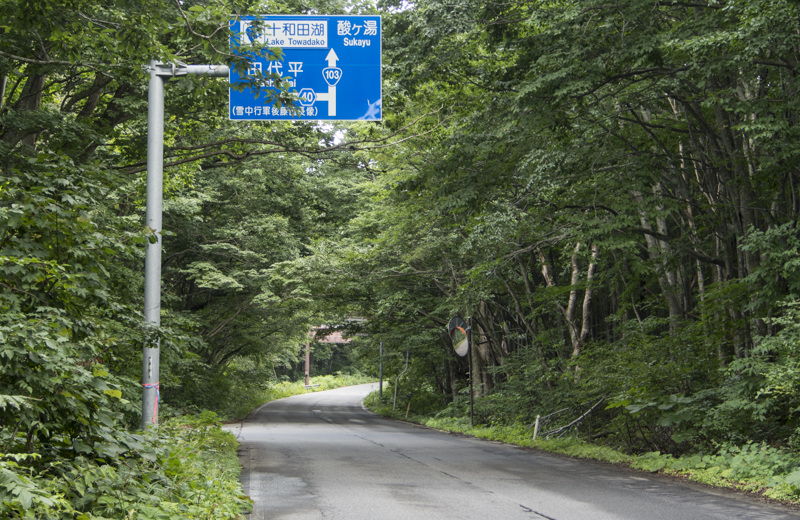
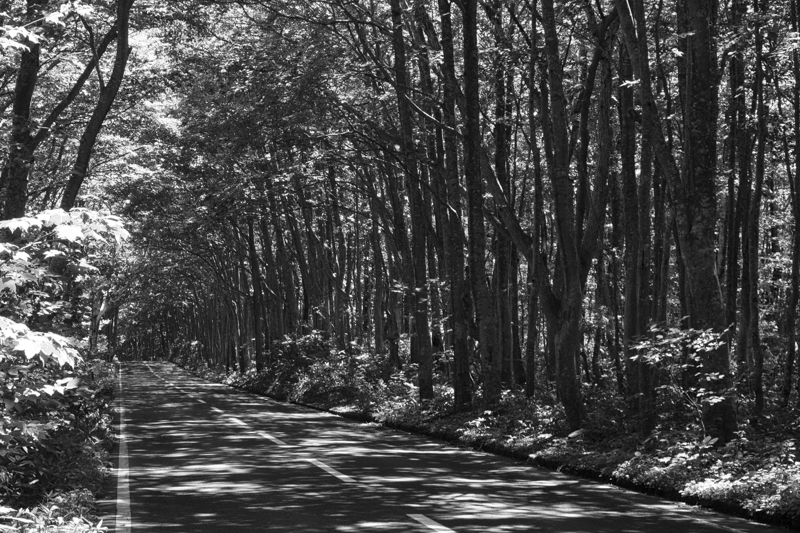
Sun dappled road through a National Park

Sun dappled road through a National Park

Anyway, it was the perfect climb: a twisty road with switchbacks, a good surface, not too many cars, and plenty of 11-13% grades to challenge the old legs.

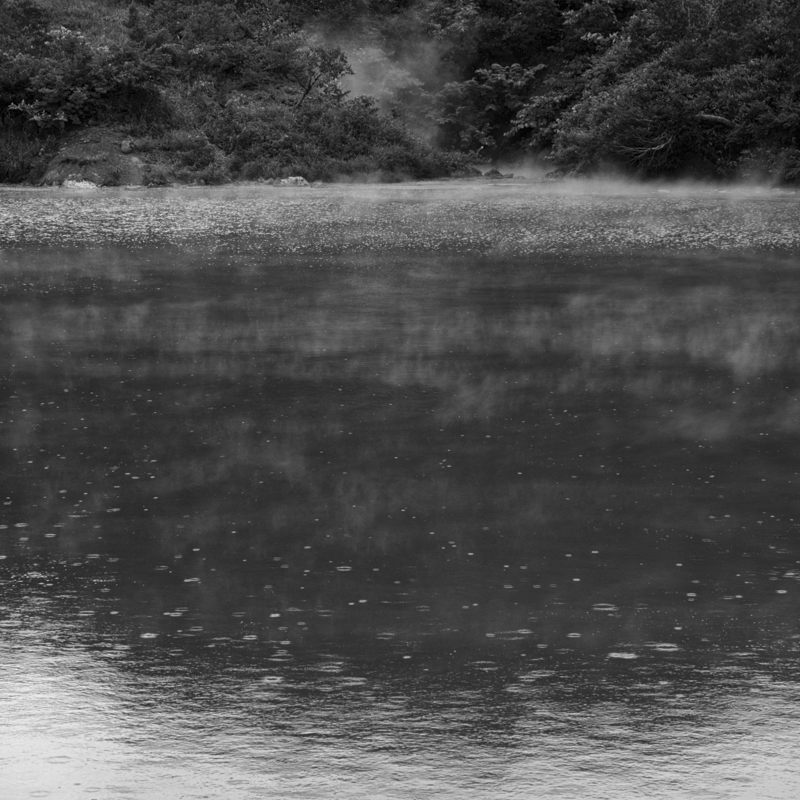
A thermal spring feeds this lake.  Very strong sulfur smell.

A thermal spring feeds this lake. Very strong sulfur smell.

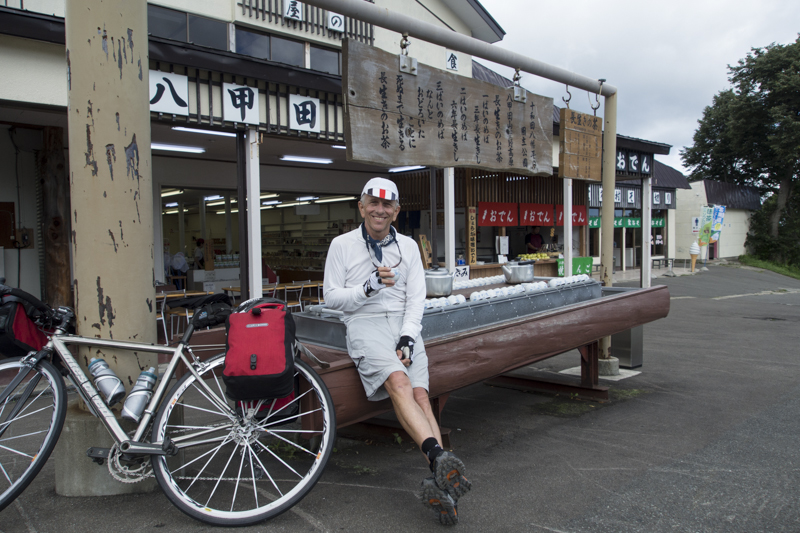
Free tea near the top of the big climb.

Free tea near the top of the big climb.

A nice place to fill a water bottle

A nice place to fill a water bottle

Cycling the Length of Japan: Day 7/8, August 22/23, 2013

•August 23, 2013 • 5 Comments

Japan2013_08-22Day 7, I rode from Sapporo to Lake Toyako.  The lake is a volcanic caldera, and is almost perfectly round, with an almost perfectly round island smack in the center (see the screen shot below).  Said to be the 2nd clearest lake in Japan.  It’s pretty clear, but nothing like Crater Lake, or even Lake Tahoe.

Lake Toyako

Lake Toyako

Me at Lake Toyako

Me at Lake Toyako

This was a very nice ride, and as you can see, it had a bit of climbing.  70 miles with 4000′ is a pretty normal Santa Fe ride; however, I have to remind myself I’m not doing a club ride, I’m on a tour with an extra 30 lbs.  Consequently, things take a bit longer.

_________________________________________________________

Japan2013_08-23

Day 8, was a ride from Lake Toyako to Mori, around Funka Bay in Southern Hokkaido.  Nothing particularly notable about this ride except there were so many tunnels I lost count after about 10.  There had to be between 15 and 20.   The seep mountains come sharply down to the sea, so I guess it was easier to drill vs. cut.  It sure looks better this way.

My first of about 20 tunnels this day.  Some, like this one, were several km long.

My first of about 20 tunnels this day. Some, like this one, were several km long.

Also, this is the center for the squid and scallop industry, and you can smell the scallops as you pass the large processing plants.  Made me hungry so I had scallop sashimi for lunch.

Mt. Yotei in the background.  It erupted in 2000.

Mt. Yotei, north of Lake Toyako, in the background. It erupted in 2000.

Mt Komagatake dominates the Mori skyline.

Mt Komagatake, yet another volcano, is a significant part of the Mori skyline.

Cycling the Length of Japan: Day 5/6 + Some Random Thoughts and Observations

•August 21, 2013 • Leave a Comment

On Day 5, I rode from Furano to Sapporo through a mostly remote region with perfect cycling roads.  The weather was good (read: no rain) and it was a very pleasant day on the bike with 70 miles and about 2500′ of climbing, so not an overly taxing day.

Raman Alley

Raman Alley

Day 6 was a “rest day” in Sapporo where I spent time exploring the downtown area.  Very nice city core, with countless interesting restaurants, but I can’t fathom what it’s like in the winter.  Here’s a dense city with 2 million people that gets 20 FEET of snow a year.  They say it’s totally surreal in the city during the depths of winter.  I can’t image where they put it all.

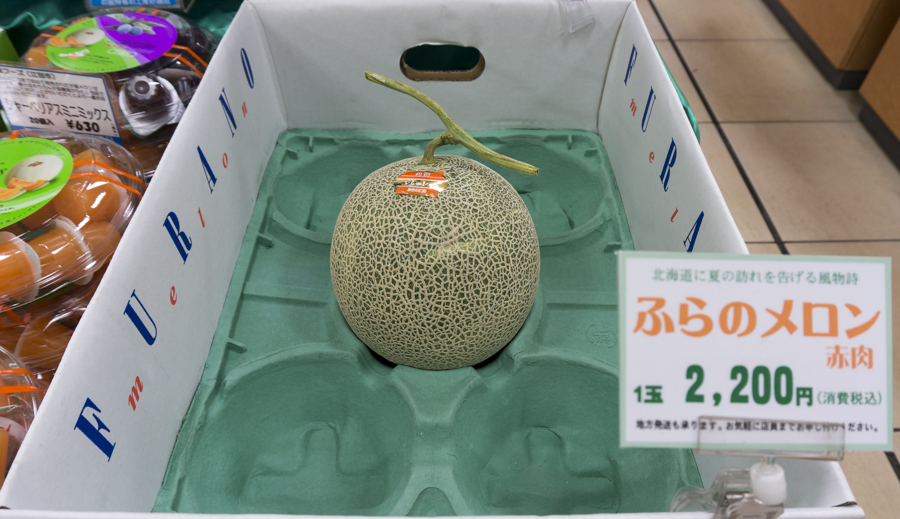
That's about $22 for a melon.

That’s over $22 for a melon

Hokkaido is an incredible fertile place, filled with farms, and  lush river valley’s that look like they could grow about anything.  But the local fruit is unbelievably expensive.  I stopped at a cherry stand and a small basket was $15.  Grapes for a similar price.  This better be one damn good melon.

This slideshow requires JavaScript.

________________________________

SOME RANDOM THOUGHTS/OBSERVATIONS:

TOILETS:  No trip to Japan would be complete without a discussion of their toilets. They give new meaning to the word “throne”.  Sure, there’s the occasional hole in the ground like the old French-style.  But the vast majority have an unsettling mixture of plumbing and electronics.  The side handle has a bunch of buttons and lights, and the contraception will usually do something when you sit, either the seat will heat up (not all that satisfying in 85 degree, 85% humidity weather), or some water will spray (hopefully down), or there’s this little beep, or the sound of rushing water.  Sometimes this electronic add-on is stuck on a standard Home Depot model, or more than likely, it’s this fully integrated unit that appears a bit over-engineered for the purpose.

The one in my current hotel has the electronic keypad on a remote device, which means the toilet either has Bluetooth or some other short range wireless technology.  I haven’t yet heard music playing, seen a place to charge my phone, or noticed a USB adaptor, but I’m sure it’s only a matter of time.

JAYWALKING:  I know Japan is a classic Social Culture (vs the Individualistic US Culture), and I know there is a culture of following the rules (one of the reasons it’s so safe to travel here), so I’m guessing that’s why no one, and I mean NO ONE ever jaywalks, at least in Hokkaido.  Never.  I’ve seen people standing at a light looking at “The Red Hand” when there isn’t a car in sight, but no ones goes.  So there I am standing right along with everyone else thinking, “wait, there are no cars, and this road is only about 25 feet wide!”, so I go, partly to see if anyone joins me.  Well, I’m here to report, when I do that, I’m solo crossing the street.  Defiant Gaijin!

BIG GLASSES COME TO JAPAN:  That faux-intellectual, nerdy, big dark-rimmed glasses look that’s all the rage in the 20/30-something hipper than hip crowd in the US, apparently has come to Japan.  And seeing it on someone with Rachel Maddows stature is one thing, but seeing it on a petite teenage girl about 5’2″ and weighing just over 100 lbs is quite another.  Not sure it works.

Cycling the Length of Japan: Day 4, August 19, 2013

•August 19, 2013 • 6 Comments

Today was a good cycling-karma day.  One small cloud burst itself open just as I was riding past a large flower garden and lavender park (there’s a lot of them around) so I stopped and had some green tea ice cream until the clouds passed.  Then, just minutes after I checked into my hotel (Minshuku, actually) the rain came down in sheets.  If I arrived 10 minutes later I would have been drenched.

This slideshow requires JavaScript.

The distance was short today so I had plenty of time to stop as I was only going from Asahikawa to Furano.  Furano is a ski town that sits at the base of the highest mountain range in Hokkaido. While the peaks aren’t very high, this town gets over 22 feet of snow a year.  August is my time to be here.

Japan2013_08-19-5

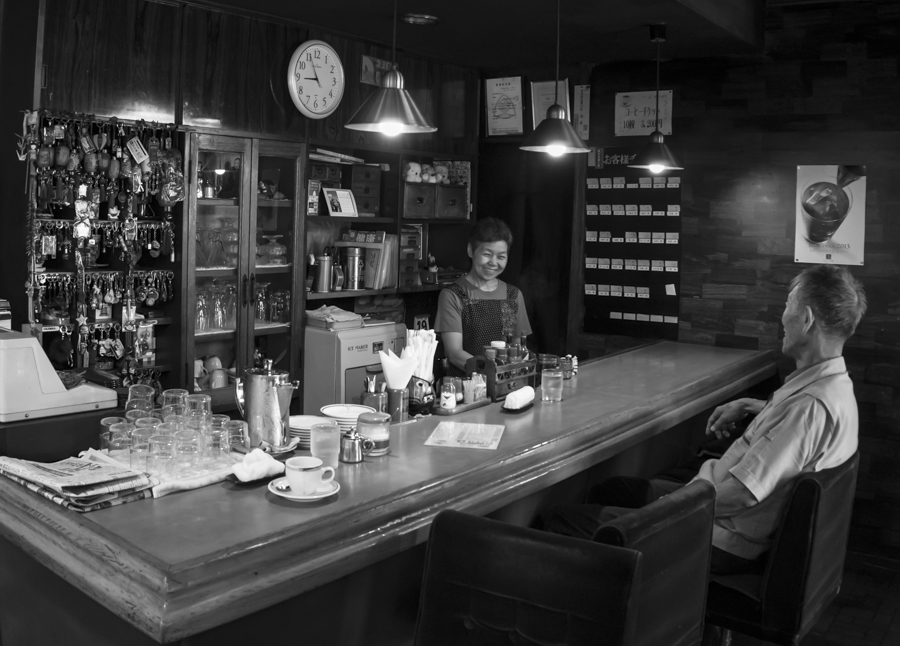
The first stop was at a very tiny coffee house where that woman took at least 10 minutes to brew my coffee in an individual drip percolator.  It was very good, but yeow, was it strong.

Japan2013_08-19-26

Japan2013_08-19-28

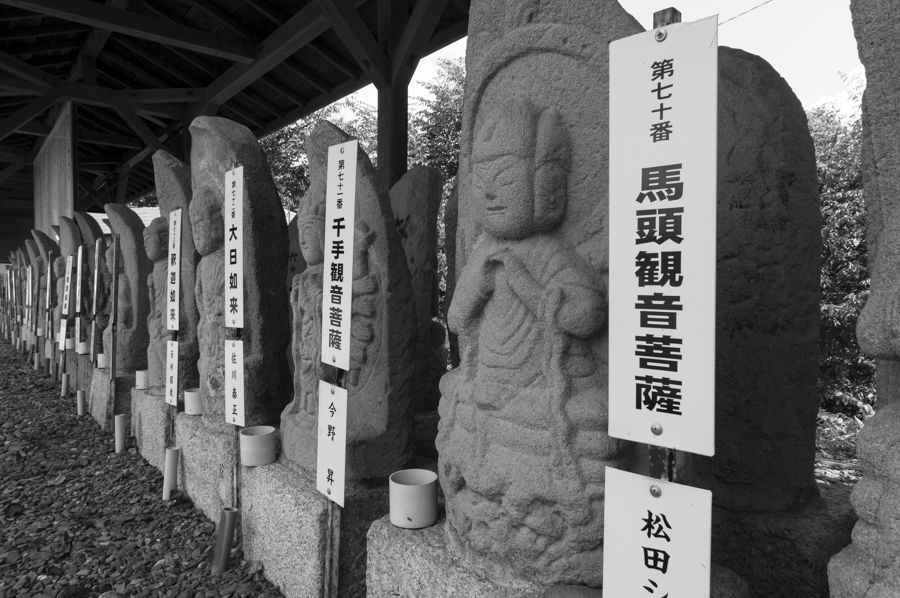
My mother (Esther) and I share the same birthday, so each year on August 16 I find a Catholic church, light a candle, and take some time to remember her.  She was a great lady (I can still hear her say, “Oh…Bobby”).  However, Catholic churches are in short supply on this island, so I’ve been trying to find a shrine or temple to light a candle or some incense.  Well, that didn’t happen on the 16th, but today I noticed a small shrine with what looked like headstones nearby (but not graves) so I stopped.  The shrine was a tiny building about 100sf with a bunch of prayer papers on the wall, so I paid my homage to Esther.

A very precisely laid out field.

A very precisely laid out field.

Oh, for those of you who’ve never been to Japan, a Minshuku is sort of a budget Japanese B&B… actually,maybe a bit below that.  This one I’m in tonight is certainly heavy on the “budget”.  I wanted to try a variety of accommodations; however, I will NOT be going below this into any Youth Hostels.   Minshuku is my limit.

Something tells me they are either over selling a bit, or the message got lost in translation.

Something tells me they are either over selling a bit, or the message got lost in translation.

Not exactly “cycling” the Length of Japan: Day 3, August 18, 2013

•August 18, 2013 • 1 Comment

I always knew there was the possibility I could be taking a train for some piece of this trip.  I assumed it would be for a mechanical issue, or weather.  I didn’t expect it to be both, nor did I expect it to be so soon.  The bike problem I alluded to on my first day had become progressively more concerning and I couldn’t find a shop in the small Northern Hokkaido towns that fully understood the issue.

And today was absolutely pissing with rain, again.   So, without really consciously deliberating the options, I started putting the steps in place to take the train to Asahikawa.

Bikes must be in bags when brought on trains, but it’s more about keeping the train clean, then the actual bag. With that in mind, I walked to the super market (in the rain, but with a hotel umbrella) and purchased a few very large trash bags and some tape.  Then on my way back I saw a bike shop and got a very cheap, small bike cover.  Then I went back to the room, packed up all my gear and just about then, there was a break in the rain, so I cycled to the train station.    I had no idea of the departure time, but I knew they go every hour or so.

The next train was in 8 minutes, so in a frenzy, I took off my front wheel and stuffed it in a plastic bag, took the bike cover and wrapped it around the frame and rear wheel, took another bag and covered the handlebars and front fork, stuffed my panniers and helmet into another bag, and wrapped it all up in about  50′ of tape.  It looked like hell (see photo), but it got me on the train, which when I was done, was leaving in 3 minutes on the opposite track over the bridge.  The train attendant grabbed my wheel and bag of panniers, I grabbed the bike and we ran like mad over the bridge with zero time to spare.  Nice guy!

Japan2013_08-18-4

That’s my mess at right.  To the left is a another bike in a real bag.  As you can imagine, I was the source of some amusement. 

Anyway, the bike shop I was looking for was about a 5-minute ride from the train station at my destination (I put the shop’s location in my GPS while on the train and it took me right to the front door).   5 minutes and 500 yen ($5.00) later, problem solved.  I was missing a small part that must have fallen off in the bike bag.

I almost gave the shop owner a hug.  The bike feels fantastic, and it felt wonderful getting back on it.

Cycling the Length of Japan: Day 2, August 17, 2013

•August 17, 2013 • 3 Comments

Today was not a great photo op day.  I’ll explain…

A brief break in the rain.  This place is very lush.

A brief break in the rain. This place is very lush.

Why, you might ask, is Hokkaido so lush and green?  Well, that can be answered in part by today’s milestone in my 30-years of cycling.  I’ve lived in two places that are known for rain: Belgium and Seattle.  And in the eight years living in those two places I did plenty of riding in the rain.

However, today I rode 6 hours (and 8 minutes) in an almost continuous downpour (except for a few brief minutes here and there); and to add to the enjoyment, I was riding into a steady headwind the whole day.

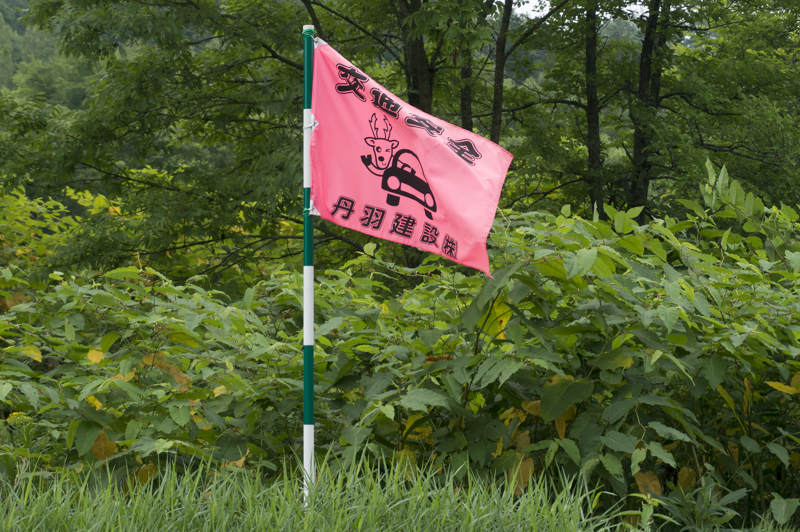
Cute deer warnings.

Cute deer warnings.

Normally riding 71 miles is no big deal and I can usually do it in around 4 hours in the saddle.  The extra 2 hours on this day was due to the wind.  And the rain is always worse when you’re heading into it.

That said, it wasn’t all that bad.  Wind is not friendly to light riders, and it can really beat me up at times.  And rain, who actually likes riding in the rain?  But, I knew this was going to happen, so I purchased the best lightweight rain gear I could find.  And boy did it come into use today.

My first tunnel.  There will be more.  At least I can see the other end!

My first tunnel. There will be more. At least I can see the other end!

One thing about rain – when you’re prepared for it – is that you can get into this cocoon (mentally, that is) and while the rain is everywhere, beating on all parts of your body, it doesn’t really make that much difference.  It’s just another environment.  Now, I MUCH prefer the sunny, calm type of environment…but I guess that wasn’t part of the cycling plan today.

Oh, I forgot to mention, the rain stopped when I was about 5 blocks from my hotel.

Cycling the Length of Japan: Day 1, August 16, 2013

•August 16, 2013 • 6 Comments

Wakkanai, Hokkaido, the northern most city in Japan, is a small windswept fishing port, just 25 miles across a choppy straight from Russia.   I spent two nights here so I could get rested and assemble my bike (one problem there, but that’s another story).

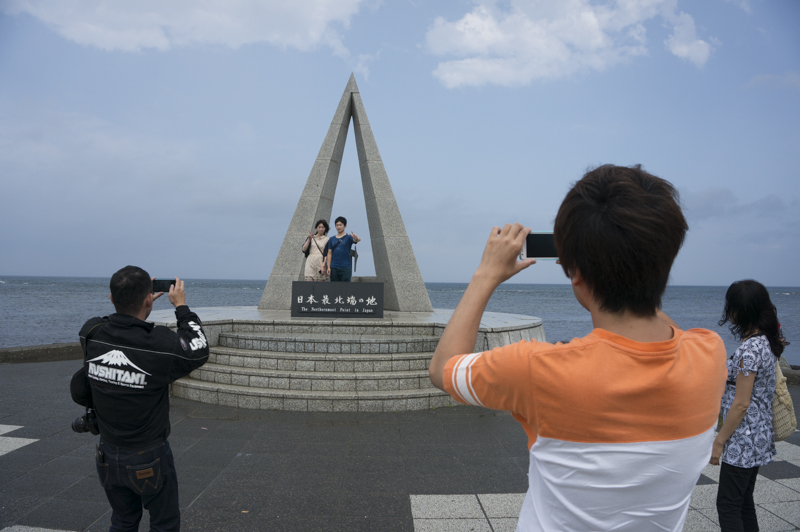
Lining up for the Cape Soya Photo Op

Lining up for the Cape Soya Photo Op

From Wakkanai I cycled 30 km further north to Cape Soya, the northernmost point in Japan where one can see Russia on a clear day – I guess that gives me enough foreign experience to run for President!

My turn

My turn

Cape Soya has a monument, which has two purposes as far as I can tell.  First, it marks the northernmost spot, and second, it gives all the tourists a backdrop for their 30-second photo op.  There’s a crowd all waiting to get their picture taken, and then it’s back in the car or on the motorcycle, or bicycle.  I was one of them, except I was the only gaijin.  So far, in three days, I have yet to see another Westerner.

It rained a bit on day 1

It rained a bit on day 1

Today’s ride was only 58 miles and practically dead flat.  During my time riding, I saw at least 30 other solo or paired cyclists doing long-distance touring.   I had a bit of rain, and a constantly howling wind all day.  This part of Hokkaido is known for its wind, and it lived up to the reputation today.

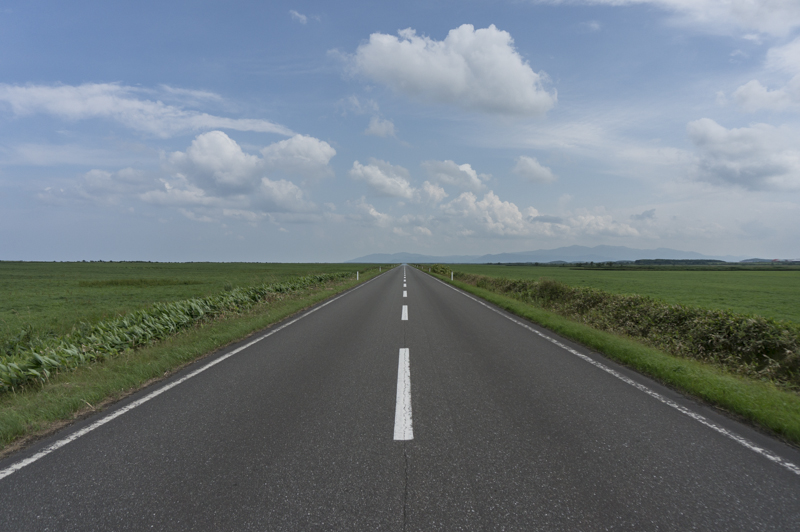
Could that road be any better for cycling?

Could that road be any better for cycling?

The food so far has been excellent.  In each meal, I’ve eaten fresh fish and myriad small plates of tasty items that had no description.  The majority of things eaten so far have been totally unknown to me as to its name, origin, or species. Hell, at times I’m not sure if it’s a plant or an animal.  I will not go hungry.

Minimalist monument

Minimalist monument

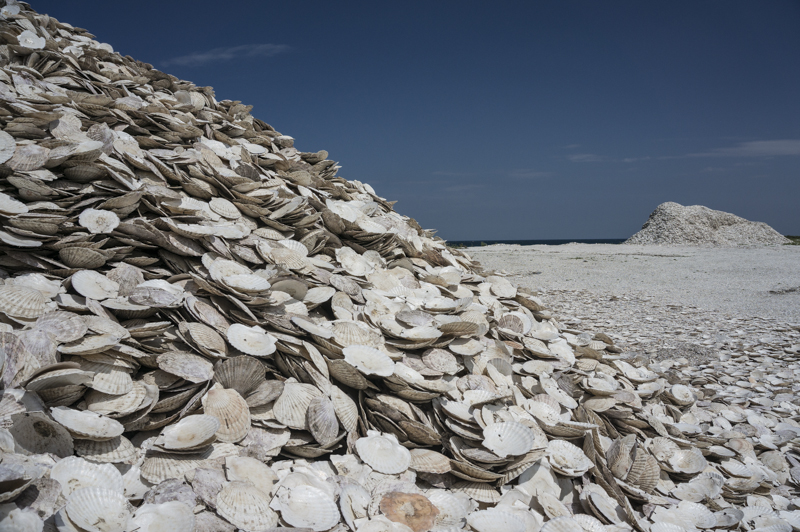
Huge piles of scallop shells

Huge piles of scallop shells

Cycling the Length of Japan: Day 0, August 15, 2013

•August 16, 2013 • Leave a Comment
A very sleek charging station at Tokyo's Heneda Airport

A very sleek charging station at Tokyo’s Heneda Airport

Quite a breakwall structure protecting the Wakkanai port

Quite a breakwall structure protecting the Wakkanai port

For me, one of the advantages of travel is going from a place defined by regular patterns of  almost complete predictability, to being instantly plunged into a steady stream of unknowns.  It’s these experiences that forces one to start learning: learning about a different culture, and learning about oneself.

Also, when travel has a constantly changing daily environment – in this case cycling – it requires a complete and total focus on every moment, otherwise, a) you could get hit by a car driving on the “other” side of the road, b) you’ll leave something important in the last hotel,  c) you’ll get lost, or d) you’ll miss seeing something really interesting.

This type of travel is an exercise in being aware, and staying outside your head.   Not an easy thing.

White Sands New Mexico

•October 7, 2011 • Leave a Comment
White Sands New Mexico-1.jpgWhite Sands New Mexico-2.jpgWhite Sands New Mexico-3.jpgWhite Sands New Mexico-4.jpgWhite Sands New Mexico-5.jpgWhite Sands New Mexico-6.jpg
White Sands New Mexico-7.jpgWhite Sands New Mexico-1.jpgWhite Sands New Mexico-8.jpgWhite Sands New Mexico-9.jpgWhite Sands New Mexico-10.jpgWhite Sands New Mexico-11.jpg
White Sands New Mexico-12.jpgWhite Sands New Mexico-13.jpgWhite Sands New Mexico-14.jpgWhite Sands New Mexico-15.jpgWhite Sands New Mexico-16.jpgWhite Sands New Mexico-17.jpg
White Sands New Mexico-18.jpgWhite Sands New Mexico-19.jpgWhite Sands New Mexico-20.jpgWhite Sands New Mexico-21.jpgWhite Sands New Mexico-22.jpgWhite Sands New Mexico-23.jpg

White Sands New Mexico, a set on Flickr.

An amazing, though difficult place to shoot.

19 June: Last Day in India

•June 19, 2011 • 2 Comments

It’s my last day in India.   I fly home tonight after two nights in Delhi.  The day was spent just wandering around until my early evening taxi ride to the airport.

The approaching monsoon season deposited a downpour this morning, which gives the 100-degree temperatures a visibly dense, humid layer. The temperature today soars on the jam-packed streets as a result of the surface heat reflection, the mass of bodies squeezing past one another, and the compounding heat that comes from the steady stream of taxi’s, motorcycles, and Tuk-Tuks.

It’s particularly acute when walking past the street vendors cooking various sweet and savory items in large vats of boiling oil, accompanied by the smoke and incense that thickens the air under their low hanging tarps.  There were times when I found it hard to breath, and had to step into an air-conditioned shop for a reprieve.  I’ve been to the same coffee shop twice now.  They make a decent Cappuccino in a cool and quiet environment that is in stark contrast to what’s just beyond the front window.


Stating the obvious, I’d say.

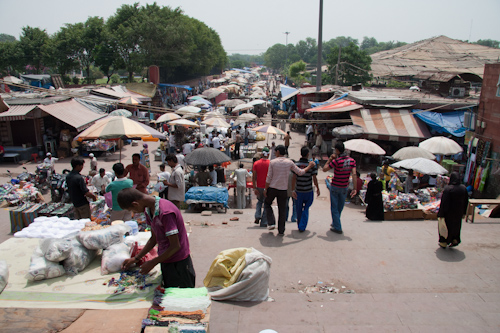
This area, Karol Bagh, is street upon street of shop after shop selling everything imaginable.   Clothing, the vast majority of which is exceedingly cheap, electronics, home goods… it’s all here.   The selection appears to be as endless as the shopping district itself.

I was somewhat interested in a pair of loosely fitting cotton pants.  I found a pair that I might want, but they were made in China.  Cotton sold in India that’s made in China?  The sales person said the tag was wrong, that they are really made in India.  Oh?  I didn’t even try to pursue the logic of that argument.

When you see the standard of living in India, and think that they find it cheaper to import cotton from China, then it tells you a bit about what the standard of living must be amongst the Chinese factory workers.  The pants were 100 rupees, which is about $1.25, but I couldn’t bring myself to buy them.  $1.25 for a pair of pants?  How is that possible?  How many pennies do the person making them, and selling them, earn on that pair of trousers?  With numbers that small, “making it up on volume” becomes an impossibility.

People selling stuff here will tell you absolutely anything and everything if it means making a sale.  It becomes difficult, tiring, and creates negative thinking to be constantly attuned to the stream of fabrications that get thrown your way.   Staying positive has been a challenge, and something I’ve had to consciously work towards.

Once you move past the seller-buyer role, you discover a genuinely nice, gentle, and friendly people.  The difficulty as a traveling tourist, who doesn’t speak Hindi, because very few people speak more than a limited amount of English, is finding the opportunity to move those roles aside.   One has to be very diligent to take advantage of those occasions whenever they might present themselves.

In Delhi – nearing the end of the journey

•June 18, 2011 • Leave a Comment

I spent my last full day wandering around some of the Delhi sights.  Delhi isn’t really as intimidating as it’s made out to be. Basically, it’s not terribly different than the other places I’ve been, only there is more of it.  Plus of course, you have a range at the high-end that you don’t get in other places, and you have a larger bottom end; though, I’m not sure it’s necessarily any lower, just wider.

It’s rained a bit over the last few days, so that appears to have cleansed the air somewhat.  When I first came through here almost 6 weeks ago my throat was burning within 30 minutes.  Either the rain has helped, or I’ve developed a protective coating on my throat (now there’s a thought!).

I couldn’t tell if it was a bicycle rickshaw graveyard or parking lot.

I continue to get people telling me to “be careful”, but I’ve yet to fully undertand what I’m supposed to be carful of.  So far, even today, even is some of the tightest, most crowed, zero-touristy, local markets and streets, I’ve yet to feel at any risk.  Either I’m ignored, smiled at, viewed as a curiosity, a sales target, or I’m occasionally warned to be “careful”.    In either case, I feel very safe here.

The largest Mosque in India

And outside the Mosque on all the streets radiating from it was the largest flea-market selling the most cheap trinkets I’ve ever seen in one place. This is just one of at least a half-dozen streets that looked all the same.

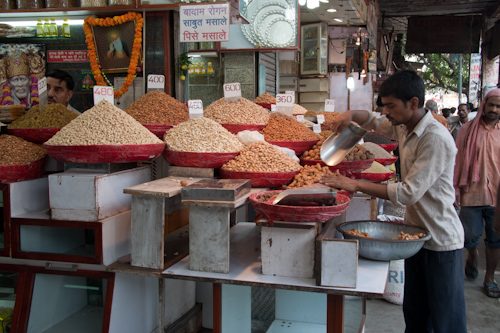
Then I visited the nut and spice market.  Shop after shop selling a wonderful array of goods.  I bought some spices, which I’m assuming I won’t have problems bringing back into the US.

The spice market road was jammed packed with people hauling goods.  These guys look like they are working really hard pulling all this stuff.

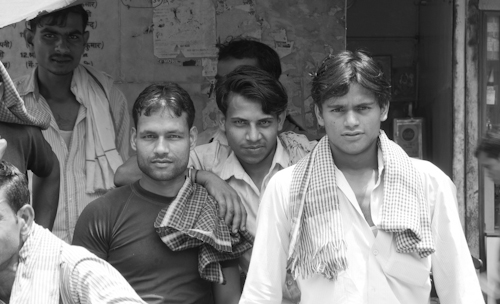
Now check this crew out.  As I was standing in the street taking photos of the people hauling goods, theses guys were yelling at me to “take our photo”, so I obliged.  They decided to show how macho they are.     Definitely the “tough” crowd.

This poor guy was cycling along and his turban or head scarf or what ever it was came undone and the wind wrapped it around his head so he couldn’t see a thing.  That didn’t stop him however.

Interestingly though, there was not one woman working in this entire district.

Driving, traffic and getting around Rajasthan

•June 16, 2011 • 1 Comment

Below describes how one can get around Rajasthan, with a particular emphasis on the last option, Driving.  This assumes of course you’re doing a do-it-alone sort of trip vs. a package tour in a nice comfy bus with a bunch of like minded travelers.   Your options:

Planes.  Not real practical as they don’t go to most places.  One or two flights might work, but ultimately, you’ll need to rely on one of the other options.

Busses.  Exceedingly cheap, crowded, and hot.  Add to that the excruciatingly long journey times, and this would only be the choice of last resort, or if you are on a painfully small budget, or you are really looking for the” True Indian Experience”.   You could also try drinking some local water and spending a few days on the toilet and call that a “true Indian experience”; however, I wouldn’t recommend it.

Trains.   Still pretty damn cheap, but the trains are crowded and overbooked weeks in advance (they do hold back some tourist tickets, but you are taking a gamble on the type of seat you might get), they are very slow-going resulting in long journey times, and are notoriously late besides.  Plus, there are some places that trains simply don’t run, so you’ll still need to supplement that choice with a bus or taxi.

Taxi’s.  See hiring a car and driver.

Driving: Hiring a car and driver.  This appears to be the common choice, as evidenced by the fact that most hotels have “driver sleeping rooms”.   This is a relatively expensive choice, though; relative to trains it might cost you an additional $20/day premium.  The good side is you have flexibility, your schedule is reasonably predictable, there’s air-conditioning, and you can use the driver at your destinations to take you places, so in theory there are zero additional transportation costs (see last paragraph where theory meets reality).

However, there is one downside to this choice, and you might think what I’m about to explain about “being on the roads in India” is a tad over-stated, but after spending 8 days driving around Rajasthan, I am NOT exaggerating.

In the annoying but not inherently deadly category are the horns.  Or should I more accurately say, the FUCKING HORNS.  Drivers of all vehicles beep their horns incessantly.  So, just how incessantly you ask?  Well, at every turn, at every vehicle passing (more on this), at every cow, when driving past a person on the side of the road (we’re in India, so as you might imagine, there are lots and lots of people on the sides of the roads), and when coming close to other vehicles (see previous comment on passing by people).

In the cities, some motorcycle drivers have decided to forego the whole beeping process, or at least the part between beeps where there is a nanosecond of silence, and simply just lay on the horn continuously.  This adds a new level of background sound to the otherwise oscillatory din.

During one bout of particularly harrowing driving I asked my driver to take it a bit easy and try and drive more safely.  His response?  Instead of actually changing any of his driving habits, he just honked the horn more.    Once on a very quiet stretch of hilly road that was amazingly devoid of cars and people, I was sitting in the back seat just wondering how long my driver would go without beeping because there was nothing to beep at.  He actually beeped the horn at a BIRD!!! I think he was having an episode of horn beeping withdrawal and had to beep at something, anything.

Passing is a continuous part of the traffic flow on Indian roads.  The highways are jam packed with trucks hauling heavy goods.  These trucks go somewhat slow, and they actually have large lettering on the back that says, “please honk”, like anyone would need a reminder.   So, trucks are passing trucks, and cars are passing cars and trucks.  The result of which is that on a two lane road – and here is where you might think I’m really overstating things a bit – you have a full-on near death experience about 10 to 20 times per hour.

How near-death are we talking about here?  Well, pretty damn near. Two trucks would regularly be coming at us taking both lanes so that my driver had to, and only at the last minute mind you, drive off the side of the road to keep us from becoming a hood ornament on the oncoming truck.  This was particularly troublesome when two trucks were coming at us at the same time my driver was also passing a vehicle.  So, you have four vehicles all barreling down the highway at each other, everyone waiting to see who blinks first… or who has a screaming American in the backseat.   This situation was the most bothersome when all this was about to occur when there were concrete barriers on the side of the road, thereby limiting our options to drive into the bushes for safety.

Now you might think that a four-lane road would solve these problems.  But you would be dead (sorry, bad choice of word) wrong in that assumption.  Even on four-lane roads that have a solid divider between them there are STILL vehicles coming at you on your side of the highway. And every road is in some state of repair, disrepair, or construction, which means that a four-lane road isn’t for very long anyway.  In short, it’s an absolute free for all.

Oh yes, one more minor item that is probably fairly obvious at this point, stop signs and stop lights are mere decorations, speed limits are obeyed by using a factor of 2, “no-passing” (excuse my while I chuckle) signs are dutifully ignored, and the number of policemen on the roads are in inverse proportion to the number of cars.

My last day of driving is supposed to be tomorrow.  It’s an 8-9 hour journey back to New Delhi, which my driver will have a joy of doing solo.  I’m flying.

Jodhpur, India: The Blue City

•June 16, 2011 • 1 Comment

These carts selling dried cakes (they look like toasted bread) are everywhere; however, if you ate one, you would also be eating the exhaust from the cars, trucks, taxi’s and motorcycles over who knows how long that have inches by.  I never actually saw anyone buying any, though it appars this youngster is eating one.

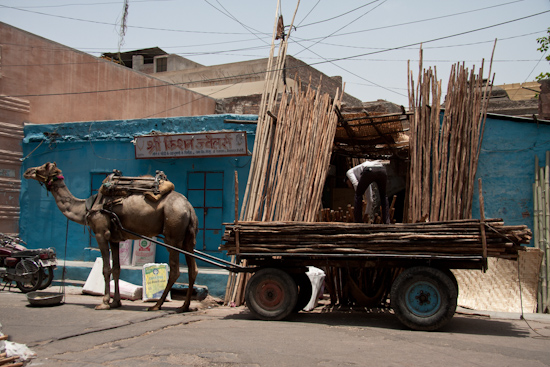
A camel pulling a cart of scaffolding.

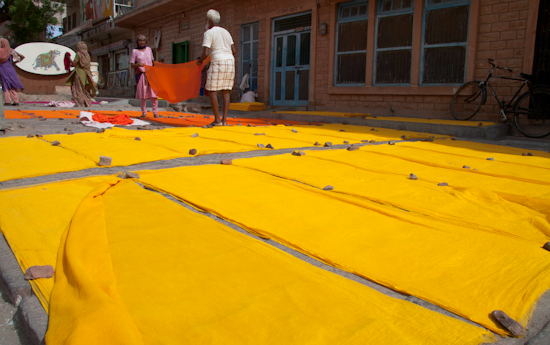
Drying textiles along side the road.

Jodhpur is called the “blue city” ’cause many of the houses in the old part are painted, yup, blue.

Me and the local music man.

My hotel in Jodhpur.  This is a central area which is open to the sky.  Must be fantastic during a rainstorm.  The restaurant is behind me, and the door to my room is off to the right, just past the arches.

This is in the fort.  It’s the handprints from the 31 wives of one King about 400 years ago. He was a busy boy.  Not sure what happened to the wives, however.   The audio guide left out that little factoid.

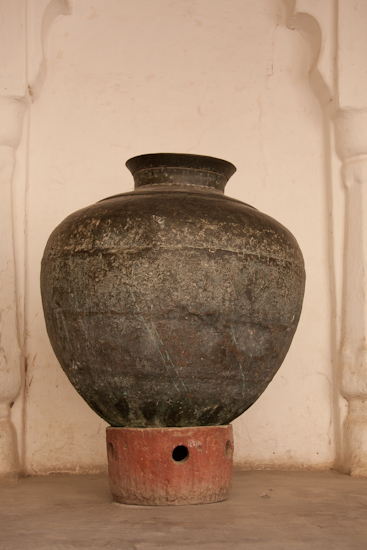
A nice pot in the fort.  It stands about 5 feet tall.

Ranakpur, India: An amazing Jain Temple, monkeys, and a camel.

•June 15, 2011 • Leave a Comment

Definitely the most impressive temple so far… and I’ve see quite a few in the last 5 weeks.

This slideshow requires JavaScript.

Udaipur, India: Just a few photos

•June 14, 2011 • Leave a Comment

A hotel on the lake.  Looks like it’s floating, but I’m assuming it’s firmly seated into the bottom of the lake.

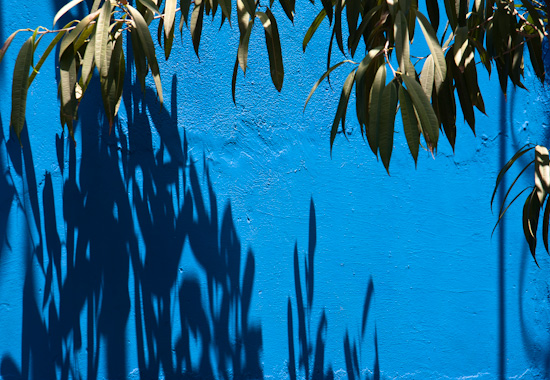
A very blue wall.

Young girl picking dead leaves out of a shrub.

The Hindi Temples are marble, marble, and more marble.  Marble floors, walls, carvings, and of course stairs, which after a rain and when in bare feet (required) makes for a very slippery surface which I can attest to given the sore foot I currently have as a result of, well…sliding on wet stairs.

Other random thoughts and observations

•June 13, 2011 • 1 Comment

In the “I’d rather not know” category:  I went into the restaurant kitchen at my hotel in Pushkar to get a glass.  Now over the last month, I’ve drunk cold drinks out of many glasses, but watching this particular glass be washed was a bit of an eye opener.  It reminds me of when I was about 5 or 6 and I just finished a plate of cookies and ice cream.  I licked the plate “clean” and put it back into the cupboard.  My mother was watching me, and took it out again, and told me the plate was dirty.  But wait, it looked clean, so it must have been clean, right?  Wrong, Bobby, it’s dirty.

I thought of that today as I watched this glass come from a shelf and get wiped with a large dirty cloth.  Then, noticing it wasn’t “clean” enough, the kitchen worker rinsed it under the cold tap (water mind you that I wouldn’t drink in a million years), and then re-wiped it with the same dirty cloth.  Hey, it looks clean, so it’s clean, right?

I drank my beer directly from the bottle.


Washing clothes in the lake

Food:  now there’s a heavy subject.  Probably the weightiest issue for me is that of eating.  The food on the bike trip was plentiful and reasonably tasty, if not a bit repetitive.  After all, how much Dahl Baht and rice can one person consume?  Well, it you’re Tibetan, quite a lot it appears.  They have it literally every day, and so did we, among other things.

In India, I have only a vague idea of the foods on the menu, so when ordering, I usually stay in a known range of items.  The basmati rice of India is very nice, and a welcome change to the sticky rice of China, but let’s face it, it still rice.  I’d do just about anything for some fresh fish and a trusted green salad.  Not something I’ll be eating until I’m back in Santa Fe.

Sub-continental haircut:  I did it.  I got a $1.20 haircut in Kathmadu, and while it’s not a very good haircut, it’s certainly not 30 times worse than my last one in Santa Fe.  Plus I got a head massage which included a very bizarre eye massage that I truly did not enjoy.  I drew the line when he wanted to twist my upper body into a pretzel with the objective of cracking my neck bone.  I don’t crack easily that way, so I had visions of him throwing my neck out in the process of finding the “crack”.   Thank you, but no thanks.


Coming into Udaipur there are hundreds of marble depots. Never before have I seen miles and miles of cut and uncut marble.

Travel books that don’t know what the hell they are talking about:  I’ve gained a new disrespect for travel books, even the Travel Bible, The Lonely Planet, since being on this trip.  One book said that a specific road in Tibet was paved after the 2008 Olympics, when in fact it was rock and dirt.  That’s not a matter of opinion; it’s hard fact that doesn’t change in a few years, even in Tibet. That minor omission is substantial when riding on a bike.

Then there are the many sights in India and Nepal that you read about and then experience.  I wonder a) if these travel writers ever visit most of these places, or b) if they do, are they seeing them though the wrong end of the telescope?  Sure, there are interesting sights in just about any town, but to discuss them with blinders on is, well, just a tad unrealistic.  After all, that’s not how one experiences a place in the real world.  You actually have to go to this supposed interesting place, and sometimes the journey is more enlightening than the destination (and quite possibly not in a positive way).

The guides also talk about the daily hassles of this city and that, of which precious few are ever really a problem.  I suspect they pull out their standard hassle list and stick in every book regardless of the practical realities of them actually happening or not.  Pick pocketing in India and Nepal?  Have I been in some parallel travel universe?  You would have to allow your wallet to dangle from your pocket to entice someone to actually take it from you.  Hell, I’ve dropped money and had people pick it up and give it back to me.  The only place I’ve felt safer is in Japan, but that’s an extreme place when it comes to travel safety.  Next time, I’m going to save my $20 and forget the travel book.


A worker managing the marble cutting machine.

Everything is “no problem” even if it is:  Your sign says you have espresso, do you have espresso, yes, no problem, but can I see your espresso machine, yes, no problem, can you please show me how you make an espresso, yes, no problem, see… see here this jar of Nescafe?  Yes, its espresso, no problem.   And: How far is the market from the hotel, no problem just 5 minutes walk, so, if I walk it’ll take me about 5 minutes, sure, no problem.  25 minutes later I reach the market.
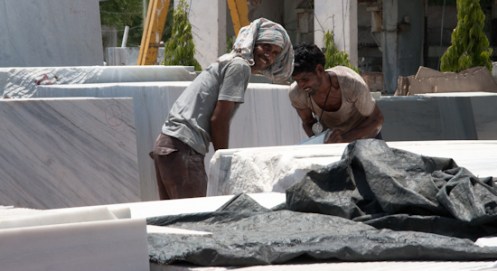
 

I have no idea why I found this this endless sea of marble slabs so fascinating, but I did.
The scene of poverty raises a notch:  To get to Udaipur from Pushkar you have to drive through Ajmer, which is just 15km into the ride.   We left Pushkar at 7:00, so we were driving through Ajmer before the city had time to fully awaken.  Now I’ve seen quite a lot of poverty so far while in the region; but there’s poverty, and then there’s Ajmer.  Just when I thought I was becoming a bit anesthetized to seeing how most people live here, my drive through Ajmer took my awe to another new level.

Hundreds, probably thousands of people sleeping on the streets and along the roads, sometimes under makeshift tents made from a draped tarp, sometimes in row upon row of actual tents that had no front or back, but more often, not even a newspaper covering them as they laid on the bare ground.  I saw children sleeping on the concrete median in the middle of the road.  Small fires were burning in corners throughout the fringe of the city giving the soot-filled air another level of toxicity from the burning plastic.   Open pits of putrid water were being used for all sorts of activities.   I left my camera in the case, it was too depressing to try and record any of it.

Then, when driving over a bridge, there were several women, nicely dressed as they normally are, sweeping dirt from the edges of the curb.  Sweeping dirt?  The context of this activity in light of what was happening just before the bridge seemed bizarrely out of place.

Then we drove by the Ajmer train station.  This is where I would have arrived and departed had I used the train system as originally planned before I decide to hire a car and driver.  The train building sat back from the road about 50 feet with a high wrought iron fence at the street line.  In that 50’ space between the fence and the building was a solid mass of people that extended the full width of the station.  Hundreds of people were jammed together, apparently trying to work their way into the station.  Had I kept my original plan, I would be there.  Well, actually, I wouldn’t, ‘cause my minor claustrophobia would have escalated into a world-class anxiety attack.  No, the train experience would not have worked.